GM-Backed Startup Peak Energy to Scale Sodium-Ion Battery Technology in the U.S.
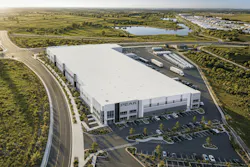
A California startup partially funded by automaker GM’s shift into the stationary battery storage market will make its long-duration sodium-ion technology footprint into American manufacturing.
Peak Energy has selected Sacramento, California, as its new site to produce up to 4 GWh of battery systems per year. The company says it already has 6 GWh of customer commitments in place, including a collaboration with investor GM Ventures.
The 183,000-square-foot Peak Energy manufacturing site will deliver passive-cooled sodium-ion batteries, which are considered longer in duration and less of a fire danger than the currently predominant lithium-ion chemistries in most stationary energy storage and electric vehicle applications.
“America needs energy storage that is lower cost, more affordable, more reliable and purpose-built to meet the demand coming onto the grid," said Landon Mossburg, CEO and co-founder of Peak Energy, in a statement. "This facility is proof that America can lead not only in inventing the technology, but in building it at scale. With our manufacturing facility in Sacramento, we're enabling American energy innovation to lower electric bills while creating high quality jobs."
Work to build the manufacturing plant could create as many as 239 local jobs over the next 18 months, according to Peak Energy. Those jobs will pay close to an average $90,000 each during that period, the company says. Overall, the company hopes to create nearly 350 jobs across Sacramento and its headquarter city of Burlingame by 2030.
Peak Energy plans to ramp up manufacturing in time to deliver shipments by the first quarter next year. The production plant will be located in Sacramento’s Metro Air Park, partially funded by $71 million of capital investment and supported with a $10.5 million CalCompletes tax credit awarded in May.
"This state has always been the country's center of energy innovation, and Peak's investment in Sacramento is proof that we're also the best place to manufacture those new technologies at scale, bringing good jobs, economic opportunity and critical infrastructure to our state,” said Dee Dee Myers, senior advisor to Gov. Gavin Newsom and director of the Governor's Office of Business and Economic Development. “With the help of CalCompetes' investment in this project, we are making sure that California's energy transition is made in California by California workers."
In addition to the investment by GM Ventures, Peak Energy has secured customer agreements with Jupiter Power, Energy Vault and RWE Americas. Peak Energy will combine its cooled storage technology with GM's battery cell development expertise.
Sodium-ion chemistries reportedly account for less than 1% of global battery production for EVs and energy storage and cost more than lithium-ion for an equivalent storage capacity. Like lithium-ion, sodium-ion functions by moving ions between two electrodes—the internal components that conduct electricity. While they rely on larger sodium ions moving through compatible host materials, researchers highlight that sodium is the sixth-most common element available to miners, making it about 1,000 times more abundant than lithium.
Other startups working on scaling sodium-ion technology to compete in the commercial battery storage market include Alsym Energy, which recently signed a 9-GWh agreement with Australia-based mining services firm ERITY and another 8.5-GWh partnership with battery energy storage system manufacturer ESS Tech.
Under the ERITY deal, Alsym Energy will deploy its sodium-ion batteries to Volt and Resource Mineral mining projects globally. The mining industry is seeking to decarbonize its on-site operations by pursuing electrification for equipment engaged at the mines.
Mastering Requirements, Standards and Risk
in a Digitally Transformed Energy Sector
Join us for July 21 EnergyTech Webinar with Siemens
Register Free for Live and On-Demand
About the Author
EnergyTech Staff
Rod Walton is head of content for EnergyTech.com. He has spent 17 years covering the energy industry as a newspaper and trade journalist.
Walton formerly was energy writer and business editor at the Tulsa World. Later, he spent six years covering the electricity power sector for Pennwell and Clarion Events. He joined Endeavor and EnergyTech in November 2021.
He can be reached at [email protected].
EnergyTech is focused on the mission critical and large-scale energy users and their sustainability and resiliency goals. These include the commercial and industrial sectors, as well as the military, universities, data centers and microgrids.
Many large-scale energy users such as Fortune 500 companies, and mission-critical users such as military bases, universities, healthcare facilities, public safety and data centers, shifting their energy priorities to reach net-zero carbon goals within the coming decades. These include plans for renewable energy power purchase agreements, but also on-site resiliency projects such as microgrids, combined heat and power, rooftop solar, energy storage, digitalization and building efficiency upgrades.