Peak Energy and GM Partner to Deploy Next-Gen Sodium-Ion Battery Storage
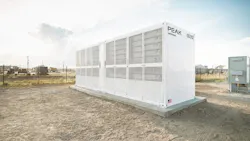
Battery storage developer Peak Energy is working with automotive manufacturer General Motors to deploy next-generation sodium-ion battery cells purposely built for stationary grid storage applications.
Backed by a strategic GM Ventures investment, Peak Energy will combine its cooled storage technology with GM's battery cell development expertise through this agreement, according to a release. Founded in 2023, Peak Energy is building a low-cost, domestic supply chain for giga-scale grid storage to drive innovation across the U.S.’s rapidly growing energy storage market.
"Lowering the cost of energy is one of the most important issues facing America today,” CEO and co-founder Landon Mossburg of Peak Energy said in a statement. “We are proud to develop an energy storage system that is safer, cheaper, and faster to deploy than any other technology on the market, enabling the U.S. to meet rapidly growing energy demand without saddling consumers with higher prices.”
Peak Energy attributes these advantages to its proprietary passively cooled BESS technology, which differs from standard energy storage tech built around lithium-iron phosphate (LFP) chemistry. According to research firm Wood Mackenzie, LFP requires active cooling to maintain safe operating temperatures.
Sodium-ion chemistries reportedly account for less than 1% of global battery production for EVs and energy storage and cost more than lithium-ion for an equivalent storage capacity. Like lithium-ion, sodium-ion functions by moving ions between two electrodes—the internal components that conduct electricity. While they rely on larger sodium ions moving through compatible host materials, researchers highlight that sodium is the sixth-most common element available to miners, making it about 1,000 times more abundant than lithium.
By eliminating the need for energy-intensive cooling systems, Peak Energy says its sodium-ion BESS reduces energy storage costs by 20% compared to conventional systems while delivering more than 99% uptime. Under this partnership, the sodium-ion cell will be developed in General Motors’ Michigan battery labs, where GM will retain exclusive manufacturing rights.
Peak Energy will incorporate the cell into its proprietary BESS application and states this partnership could help the U.S. reduce battery storage's annual energy waste by up to 2 TWh per year by adopting its passively cooled system. It’s the equivalent of saving enough energy to power a midsized city for a year, according to the company’s analysis.
“Peak is already demonstrating the value of sodium-ion through their innovative energy storage platform, and together we're working to push those benefits even further with our next-generation cell — helping deliver more reliable, lower-cost energy storage at scale for the U.S. grid,” said Kurt Kelty, vice president of battery and sustainability at General Motors.
GM has scaled back EV battery production at select plants, shifting its battery production capacity toward stationary energy storage for the grid and distributed energy sectors.
The companies add that increasing the supply of sodium-ion chemistries offers the prospect of building new supply chains for energy and critical minerals, and eventually breaking away from that LFP resource dependence on China. About 80% of the world’s lithium-ion batteries are currently manufactured in China.
About the Author
 Eric Moody