Atlanta Church Embraces Solar Power for Sustainability and Savings
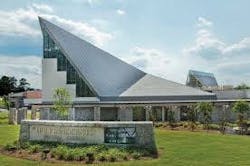
An historic church congregation in Atlanta is seeing the light when it comes to energy sustainability and affordability.
Holy Innocents’ Episcopal Church has contracted Atlanta-based Cherry Street Energy to deliver a new solar-photovoltaic array that should offset 23% of the church’s annual energy use and could save the congregation more than $300,000 over the 20-year agreement.
"Holy Innocents is excited to work with this amazing team at Cherry Street," says the Rev. Dr. Bill Murray, Rector of Holy Innocents' Episcopal Church. "They are professional, easy to work with, and are incredibly responsive to questions and concerns. We look forward to working together for years to come."
Sun City West: Arizona Church Celebrates On-Site Solar
Read more about Church Microgrids at Microgrid Knowledge
Cherry Street Energy is developing the solar project under the long-term contract and with no upfront costs to Holy Innocents’ Episcopal Church. The solar array should generate thousands of kilowatt-hours of low-carbon energy annually, helping the congregation participate in reduced carbon emissions and energy affordability.
"We're helping create a more sustainable operating model for Holy Innocents, providing practical, cost-effective ways for it to support operations with renewable energy," says Michael Chanin, CEO of Cherry Street Energy. "Faith-based communities are often leaders in environmental stewardship and responsibility, and our platform allows them to move their missions forward with confidence and budget predictability."
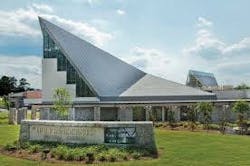
The origin of Holy Innocents’ Episcopal Church dates to 1872, when the Rev. W.B. Elliott led St. Philip’s Episcopal to found a mission Sunday school for the “poor of the northern suburb.” This and other funding helped create the Mission of Holy Innocents, which operated until 1954.
The church built its current home in the mid-20th century in the midtown Atlanta area. For the last 67 years it has also housed the PK-12th grade Holly Innocents’ Episcopal School co-educational college preparatory day school in Sandy Springs, Georgia.
Cherry Street Energy, which now owns and operates 200 solar power systems across the southeastern U.S., has added to the church partnerships started with a project for Temple Sinai in Sandy Springs, Georgia.
In an interview with EnergyTech.com at the RE+ 2025 Conference last year in Las Vegas, CEO Chanin expounded his company’s vision to elevate the capacity of rooftop and canopy solar on the built environment of metropolitan Atlanta. He contends there are gigawatts of worthy potential just within that city.
“Distributed energy is not a panacea but a material help,” Chanin pointed out at RE+. “This technology has reached the point of commercialization. That’s become clearer, and that technology is now accessible and available at a pace which is the most capital efficient and quickest to serve at the place it’s needed the most.”
A New Era in Energy Efficiency-Innovations for Today and Tomorrow
New White Paper by Ameresco
About the Author

Rod Walton, EnergyTech Managing Editor
Managing Editor
For EnergyTech editorial inquiries, please contact Managing Editor Rod Walton at [email protected].
Rod Walton has spent 17 years covering the energy industry as a newspaper and trade journalist. He formerly was energy writer and business editor at the Tulsa World. Later, he spent six years covering the electricity power sector for Pennwell and Clarion Events. He joined Endeavor and EnergyTech in November 2021.
Walton earned his Bachelors degree in journalism from the University of Oklahoma. His career stops include the Moore American, Bartlesville Examiner-Enterprise, Wagoner Tribune and Tulsa World.
EnergyTech is focused on the mission critical and large-scale energy users and their sustainability and resiliency goals. These include the commercial and industrial sectors, as well as the military, universities, data centers and microgrids. The C&I sectors together account for close to 30 percent of greenhouse gas emissions in the U.S.
He was named Managing Editor for Microgrid Knowledge and EnergyTech starting July 1, 2023
Many large-scale energy users such as Fortune 500 companies, and mission-critical users such as military bases, universities, healthcare facilities, public safety and data centers, shifting their energy priorities to reach net-zero carbon goals within the coming decades. These include plans for renewable energy power purchase agreements, but also on-site resiliency projects such as microgrids, combined heat and power, rooftop solar, energy storage, digitalization and building efficiency upgrades.