Sunrun, Tesla Deploy 580 MW from VPP to Aid California’s Grid During Heat Wave
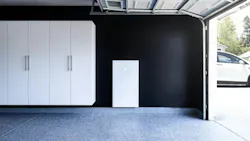
Residential energy aggregator Sunrun Inc. is celebrating a historic milestone alongside automotive and clean energy company Tesla after dispatching power from more than 140,000 California home batteries during a severe weather event this month.
The companies announced Monday that their combined fleets of home batteries dispatched more than 580 MW of peak power statewide to California’s grid amid extreme heat and elevated demand for electricity on the evening of Sept. 9. This coordinated effort, in response to requests from the California Energy Commission (CEC), reportedly marked the largest virtual power plant (VPP) dispatch event on record, matching the capacity of a traditional power plant.
On social platform X, Tesla rejoiced Monday in a post calling it "the largest residential virtual power plant event in history."
VPPs can aggregate tens, hundreds or even thousands of distributed energy resources (DERs) into a single, dispatchable resource by using remote cloud-based software. That software manages the output of DERs more efficiently on the broader grid, reducing electricity demand at peak times.
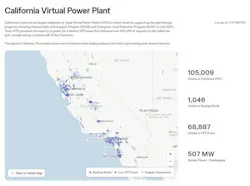
The event delivered 517 MW from 110,000 Tesla Powerwall home battery storage units (55% managed and operated by Sunrun) and 63 MW from an additional 30,000 batteries within Sunrun’s fleet, according to a release. The companies noted that this collective output generated enough capacity to power every household in Sacramento County during peak hours.
Sunrun and Tesla discharged their customers’ battery systems to the grid over a three-hour evening period to bolster the grid’s operating margin and suppress wholesale power price spikes.
“Sunrun’s distributed home batteries are operating at a scale larger than many peaker power plants combined,” Sunrun CEO Mary Powell said in a statement. “Families depend on their Sunrun energy systems for outage protection and energy independence. This historic dispatch shows that the benefits of distributed energy go well beyond individual households as we help control the cost of electricity for all Californians and reduce the need for new costly poles and wires.”
Participating customers were enrolled in two statewide CEC grid service programs: The Demand Side Grid Support program, which handles market-driven, automated responses and is structured to protect the grid when wholesale prices exceed $200 per MWh. In addition, CEC’s Emergency Load Reduction Program coincided with the event and was run by utility Pacific Gas and Electric Company (PG&E) for batteries located within its territory.
Global economic consulting firm The Brattle Group previously highlighted that these types of programs could ultimately support up to $206 million in direct savings, benefiting all Californian grid-connected customers by 2028.
In June, Sunrun, Tesla and home energy management company Renew Home detailed plans to deliver more than 16 GW of nationwide VPP capacity this fall from nearly 21,000 existing flexible energy devices. The new, Google-funded distributed power plant with utility PG&E would optimize the trio's “capacity-as-a-solution” framework by freeing up more capacity on the existing grid.
By aggregating household energy to ease congestion on power infrastructure, these efforts aim to help American households lower energy bills, earn rewards and provide reliable power through outages.
About the Author
EnergyTech Staff
Rod Walton is head of content for EnergyTech.com. He has spent 17 years covering the energy industry as a newspaper and trade journalist.
Walton formerly was energy writer and business editor at the Tulsa World. Later, he spent six years covering the electricity power sector for Pennwell and Clarion Events. He joined Endeavor and EnergyTech in November 2021.
He can be reached at [email protected].
EnergyTech is focused on the mission critical and large-scale energy users and their sustainability and resiliency goals. These include the commercial and industrial sectors, as well as the military, universities, data centers and microgrids.
Many large-scale energy users such as Fortune 500 companies, and mission-critical users such as military bases, universities, healthcare facilities, public safety and data centers, shifting their energy priorities to reach net-zero carbon goals within the coming decades. These include plans for renewable energy power purchase agreements, but also on-site resiliency projects such as microgrids, combined heat and power, rooftop solar, energy storage, digitalization and building efficiency upgrades.