Strategic Supply Chain Move: Canada Approves Major Nickel and Chromium Mining Project
Key Highlights
- This project is a milestone in Canada's efforts to streamline permitting processes while maintaining strict environmental and Indigenous rights standards.
- Nickel and chromium are critical for batteries, renewable energy, steelmaking, and defense, making this project vital for global decarbonization and supply chain resilience.
- Partnerships with Indigenous nations, including a $20 million investment from Taykwa Tagamou Nation, exemplify collaborative resource development.
Nickel and chromium put the critical in “element” when it comes to future demand for decarbonization, industrial and electrification technologies. They provide a key mineral answer to the needs of batteries, geothermal and renewable energies.
The question, however, is how to get them safely and efficiently since most of the nickel supply chain originates in southeast Asia and chromium in Africa.
These geopolitical and supply chain challenges have driven the Canadian government to make its first major mining approval under key environmental considerations in seven years. Canada Nickel Co. received a positive decision from the national Minister of Environment to move plans forward for the Crawford Nickel Project in Ontario.

Canada Nickel hopes to convert the Crawford mine into the largest nickel sulphide operation in the western world, as well as North America’s only primary source of chromium. The two elements are utilized in battery storage and other major low or carbon-free power resources, including wind, geothermal and nuclear, as well as defense, steelmaking and manufacturing.
"The Crawford Nickel Project is an example of Canada's global critical minerals leadership, and today's approval is a testament to our government's commitment to getting projects approved and streamlining our permitting processes in a way that maintains rigorous environmental standards and respect for the rights of Indigenous Peoples,” Canadian Minister of Energy and Natural Resources Tim Hodgson said in a statement. “This is how we create investment certainty for Canadian mining here in Ontario and across the country, so we can be a critical minerals superpower and create economic growth and opportunity and enhance supply chain sovereignty for all Canadians."
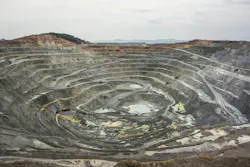
Canada Nickel project has proposed to create the open-pit nickel cobalt mine in northern Ontario and operate it for 40-plus years. The anticipated output could produce close to 240,000 metric tons of mine ore per day, according to the Canadian government’s Impact Assessment Agency data.
The project could create thousands of jobs for nearby tribes such as Mattagami, Matachewan, and Flying Post First Nations. The Taykwa Tagamou Nation has partnered with Canada Nickel Company to invest $20 million in the Crawford Nickel Project.
The U.S. has one nickel mine at the Eagle site in Michigan, which produces about 17,000 metric tons annually, according to recent reports. The nation consumes more than 200,000 metric tons of nickel and nearly 400,000 tons of chromium per year, U.S. Geological Survey statistics show.
Canadian governmental agencies have been reviewing the Crawford project several years and it was one of the first approved to advance under the provincial Ontario’s One Project, One Process framework.
The last mine approved by Canada was in 2019. This is the first under the updated federal Impact Assessment Act.
"Today's decision recognizes the strategic importance of responsibly developing Canada's critical mineral resources in partnership with all levels of government and Indigenous Nations while maintaining rigorous environmental standards,” Canada Nickel Co. CEO Mark Selby said in a statement released with the project’s approval announcement several days ago. “I am very proud of our team, which completed this key federal permit in just four years and advanced Crawford from its fifth drill hole through feasibility study to today's milestone in under seven years - substantially faster than typically required for large-scale projects.”
Nickel helps improve energy density in rechargeable batteries and also provides corrosion resistance in industrial metal alloys. This density helps extend the rate of electric vehicle batteries and is used in stainless steel products.
Canada is the second largest trading partner with the U.S., behind only Mexico. China, Taiwan and Vietnam rank third, fourth and fifth, respectively, according to May 2026 U.S. Census Bureau data.
The Electrodes Less Traveled
Which Energy Technologies Contradict Conventional Paths
Free and New E-Book from EnergyTech.com
About the Author

Rod Walton, EnergyTech Managing Editor
Managing Editor
For EnergyTech editorial inquiries, please contact Managing Editor Rod Walton at [email protected].
Rod Walton has spent 17 years covering the energy industry as a newspaper and trade journalist. He formerly was energy writer and business editor at the Tulsa World. Later, he spent six years covering the electricity power sector for Pennwell and Clarion Events. He joined Endeavor and EnergyTech in November 2021.
Walton earned his Bachelors degree in journalism from the University of Oklahoma. His career stops include the Moore American, Bartlesville Examiner-Enterprise, Wagoner Tribune and Tulsa World.
EnergyTech is focused on the mission critical and large-scale energy users and their sustainability and resiliency goals. These include the commercial and industrial sectors, as well as the military, universities, data centers and microgrids. The C&I sectors together account for close to 30 percent of greenhouse gas emissions in the U.S.
He was named Managing Editor for Microgrid Knowledge and EnergyTech starting July 1, 2023
Many large-scale energy users such as Fortune 500 companies, and mission-critical users such as military bases, universities, healthcare facilities, public safety and data centers, shifting their energy priorities to reach net-zero carbon goals within the coming decades. These include plans for renewable energy power purchase agreements, but also on-site resiliency projects such as microgrids, combined heat and power, rooftop solar, energy storage, digitalization and building efficiency upgrades.