Grid Constraints Emerge as a Barrier to Industrial Heat Electrification
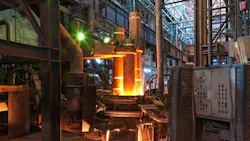
Industrial process heating technologies are increasingly commercially available, but limited grid capacity and lengthy interconnection timelines are creating challenges for manufacturers looking to electrify their operations.
Resistance heating, electric boilers, electric arc furnaces, industrial heat pumps and induction heating have reached commercial readiness. However, connecting these technologies to the power supply needed to operate them is becoming a significant constraint on industrial electrification projects.
According to Frost & Sullivan's latest growth opportunity analysis, the global industrial electrification technologies market is projected to grow from $13.76 billion in 2025 to $26.81 billion by 2035, representing a compound annual growth rate of 6.9%.
The analysis identifies limited access to credit, capital expenditure requirements and uncertainty over future electricity prices as factors restraining market growth. Grid capacity is another significant challenge, with multi-year interconnection queues in parts of India, Southeast Asia and the United States delaying project development.
Grid Capacity Shapes Electrification Timelines
Rather than eliminating demand for industrial electrification, grid constraints are pushing projects further into the future. Frost & Sullivan expects market growth to remain steady through the remainder of the decade before accelerating as transmission expansion, industrial microgrids and grid-interactive demand management help address infrastructure limitations.
“Nobody in this industry is waiting on a technological breakthrough any more. They are waiting on an interconnection date,” said Agustin Claret, growth expert at Frost & Sullivan.
Claret said the ability to move an industrial facility from equipment purchase to operational process heating is becoming an increasingly important consideration for suppliers.
High-Temperature Applications Drive Market Growth
The market's technology segments are expected to grow at different rates, with high-temperature systems accounting for a larger share of the market after 2030. Tighter emissions standards and improvements in technology readiness are expected to support adoption in applications requiring higher process temperatures.
Industries including chemicals, food and beverage, pulp and paper, and metals are contributing to demand for electrification technologies. Corporate emissions-reduction targets and mandatory emissions reporting are also encouraging manufacturers to replace fossil-fuel-fired burners, furnaces and boilers.
Regional Investment and Grid Access Influence Adoption
Onshoring and friendshoring are concentrating new industrial capacity in regions with active decarbonization policies. North America and the European Union are leading demand for electric arc furnaces, supported by established scrap markets and incentives for lower-carbon steel production.
However, grid connection delays in several U.S. jurisdictions are creating challenges similar to those facing industrial projects in parts of Asia. Differences in regional policies and infrastructure investment are expected to contribute to uneven adoption across markets.
Frost & Sullivan's analysis identifies approximately 120 active competitors in the industrial electrification technologies market. The top 50 companies account for slightly more than half of total revenue.
According to the analysis, suppliers are increasingly competing on their ability to address project implementation challenges, including equipment integration, power quality requirements, delivery timelines, commissioning and ongoing service.
Claret identified digitalization, manufacturing reshoring and the ability to help industrial customers move forward despite infrastructure constraints as areas of opportunity for suppliers.
About the Author
 Nikki Chandler
Group Editorial Director, Energy
Nikki is Group Editorial Director of the Endeavor Business Media Energy group that includes T&D World, EnergyTech and Microgrid Knowledge media brands. She has 29 years of experience as an award-winning business-to-business editor, with 24 years of it covering the electric utility industry. She started out as an editorial intern with T&D World while finishing her degree, then joined Mobile Radio Technology and RF Design magazines. She returned to T&D World as an online editor in 2002. She has contributed to several publications over the past 25 years, including Waste Age, Wireless Review, Power Electronics Technology, and Arkansas Times. She graduated Phi Beta Kappa with a B.S. in journalism from the University of Kansas.
Related
 electric_arc_furnaces_dreamstime
 Dreamstime M 95323190 21175225