New Company to Recover Critical Materials From Retired Data Center and Energy Assets
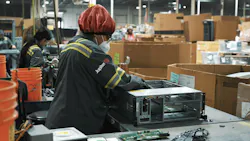
Korea Zinc and Solarcycle have launched Jupiter, a new company focused on recovering and reusing materials from retired information technology (IT) and energy infrastructure, including equipment used by data centers and other large-scale digital operations.
Jupiter combines Solarcycle, a solar panel recycling company, with PedalPoint Recycling, Korea Zinc's U.S. recycling and metals business. The company will manage the recovery process from equipment decommissioning and assessment to component reuse, resale, recycling and metals refining.
The launch comes as demand for critical materials increases alongside investment in artificial intelligence (AI), data centers and energy infrastructure. Recovering metals and components from retired equipment could provide an additional source of materials for expanding digital and energy systems while reducing reliance on newly mined resources.
Jupiter plans to use Korea Zinc's global smelting and refining infrastructure to process recovered materials. That includes Project Crucible, a $7.4 billion metals smelting and refining facility under development in Clarksville, Tennessee, in partnership with the U.S. Department of War. The facility is expected to begin production in 2029 and process approximately 1.1 million tons of raw materials annually, producing up to 540,000 tons of finished products.
The company launches with eight certified advanced recycling facilities in the U.S., approximately 250 employees and nearly 1 million square feet of processing capacity. Its operations combine PedalPoint's IT asset disposition and recycling network with Solarcycle's solar panel recycling capabilities.
Korea Zinc will hold a majority stake in Jupiter, with Solarcycle and its existing investors and management holding the remaining interest. Suvi Sharma, formerly of Solarcycle, will serve as CEO, while Kevin Hahm of PedalPoint will serve as CFO.
The company also plans to provide customers with traceability across the recovery process, allowing recovered materials to potentially reenter their supply chains. Its initial customer base includes companies such as Microsoft, Prologis and Brookfield.
Microsoft, an investor in Solarcycle, cited the importance of materials recovery to domestic supply chains as demand for AI and supporting infrastructure grows.
"Recovering and reusing critical materials will become increasingly important to building resilient domestic supply chains and advancing a more circular economy," said Brandon Middaugh, general manager of market development at Microsoft.