Pantheon Electric to Scale Manufacturing through Merger to Tackle Copper Deficit
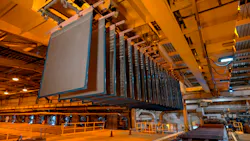
Copper supply provider Pantheon Electric is merging four core manufacturing companies to expand its electrical infrastructure footprint across 21 plants globally, directly addressing the world’s growing copper shortage.
Backed by private equity firm Olympus Partners, the platform officially announced the unification of four core manufacturing companies on Thursday. The company, formed in January, includes: International Wire Group, Hussey Copper, EMS Elektro Metall Schwanenmühle and Special Corde.
With a combined production capacity of hundreds of millions of pounds of copper wire annually, Pantheon Electric merged to scale itself in trying to meet the large-scale electrification needs of hyperscalers intent on building out AI factory capacity and connected energy resources.
While its physical plants span 21 international locations in North America and Europe, Pantheon Electric’s centralized headquarters is located in a 4,853-square-foot office in Stamford, Connecticut. The distributed U.S. plant footprint includes nine New York plants, two in Kentucky, and one plant each in Pennsylvania, South Carolina and Texas.
All of the companies integrated under the Pantheon Electric platform specialize in the manufacturing of uninsulated copper conductors and critical electrical connection components. These materials are vital for advancing energy technology and AI data center expansions that rely heavily on copper for power and cooling infrastructure.
“The bottleneck for the electrified economy isn’t ambition or capital. It’s whether the physical materials and technical expertise exist to build what everyone is planning,” said CEO Gregory J. Smith of Pantheon Electric in a statement. “We’ve put together the scale and the secured copper supply to make sure they do, so the companies powering the future have a partner who can deliver for years, not one scrambling for material every quarter.”
This integration arrives as copper’s enduring criticality grows ever greater, and global shortages are projected to further tighten supply. Pantheon Electric states that this consolidation creates a unified manufacturing base capable of fueling the global and domestic electrification economy.
According to a release, this expanded scalability establishes a single-sourced hub for copper conductors, busbars and engineered conductive systems. The integrated platform provides direct access to raw materials—converting bulk copper rod and recycled industrial scrap from suppliers into finished electrical components via its vertically integrated manufacturing pipeline.
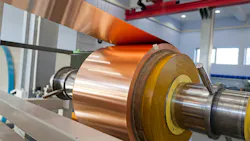
The acquisition of Hussey Copper serves as the company’s foundation layer for raw melting and rolling. Each Pantheon Electric facility, however, operates independently.
“Hussey Copper maintains vertically integrated operations, melting copper scrap into heavy plates and sheets for its own production,” a Pantheon Electric spokesperson said.
Operating in a similar, independent fashion, systems from the International Wire Group and EMS draw their own separate copper inputs into braided wire and advanced busbars that serve as electrical conductors. Both entities do not utilize Hussey Copper's raw materials, nor do they supply each other.
Pantheon Electric contends that this integrated portfolio of capabilities not only meets the demand of hyperscalers but also supports utilities modernizing the grid, manufacturers reshoring production and defense programs across North American and European operations.
The global copper market is on track to face a 30% supply deficit, even as the world enters what some are calling the “Age of Electricity.” This is leading to a projected $140 billion supply deficit by 2035. AI and data centers alone will drive 2 million additional metric tons of copper demand by 2040, despite a projected 10 million metric-ton shortfall, according to S&P Global.
U.S. and European officials in April launched a strategic action plan for aggressive domestic and international supply strategies to deepen cooperation on critical raw materials. It includes border-adjusted price floors and standard base markets for copper—in addition to price gap subsidies and offtake agreements to focus on the development of common standards for mining, processing and recycling.
Although copper demand is rising faster than the world can supply it, startup companies like SiTration are working to address this inadequate supply through recovery amid economic shifts in mining dynamics. Copper retains 100% of its electrical conductivity no matter how many times it is recycled.
Global mining firms such as Rio Tinto and BHP also are aiming at expanding their copper output by millions of metric tons by 2030 through new underground ramps and technologies.
About the Author
 Eric Moody