Domestic Copper Components Emerging as Critical Resource for AI, Utilities Ahead of Expanded FEOC Restrictions
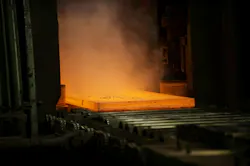
As American developers and manufacturers move closer to implementing broader supply practices around Foreign Entity of Concern (FEOC) restrictions, companies like Pantheon Electric are unveiling domestic supply plans for utilities and grid equipment makers to increase reliability.
The copper supplier is helping power providers get ahead of the FEOC order this month by securing U.S.-made copper components before the U.S. Department of Energy (DOE) finalizes its nationwide bulk-power system security rules between late December and January 2027. The rules stem from Executive Order 14421, in which President Donald Trump declared a “national emergency” in August over security, foreign policy and economic risks from certain foreign actors “increasingly creating and exploiting vulnerabilities” in the U.S.
To ensure reliable electricity for the nation’s defense system, emergency services and other related infrastructure, critical resources such as copper have become increasingly vital amid the rapid growth of manufacturing, data centers and artificial intelligence. Without copper, traditional power plants could not function, and the electricity that travels from them to homes and businesses would not be produced.
But the federal ruling will bar access to grid equipment and critical components made by select foreign nations that include China, Russia, Iran and North Korea.
AI data center demand tests Pantheon’s merged copper hub for grid equipment
Currently, Pantheon Electric, one of North America’s largest copper component manufacturers, reportedly processes more than 1 million pounds of copper a day across 14 U.S. plants out of 21 globally. Pantheon supplies copper components to equipment and cable makers, including Schneider Electric, Eaton and Prysmian Group, among its base of more than 2,500 customers.
However, limiting these components to domestic supply to carry out this massive hyperscaler buildout alone is raising some industry concern about keeping pace. A next-gen hyperscale facility can reportedly consume 50,000 tons of the metal.
A Nov. 17 study by Johns Hopkins University researchers in Cell Reports Sustainability also indicates that data center transformers require more than four times as much copper compared to conventional ones. Researchers noted that this increased demand could trigger copper-driven grid equipment shortages as early as 2027.
“Whatever form the final rules take, utilities need a supply chain they can count on,” said Pantheon Electric CEO Gregory J. Smith in a statement. “As data centers push power demand higher, the grid can’t afford to depend on materials that swing with tariffs and global events. Copper made and sourced at home gives utilities one less thing outside their control.”
The U.S. grid today is growing faster than its supply chain. Utilities and manufacturers scramble to reinforce an already tight market amid S&P Global projections of a 10 million metric ton copper shortfall by 2040. Meanwhile, federal review of grid equipment sourcing brings the spotlight onto Pantheon’s domestic recycling and repurposing methods.
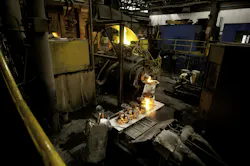
The company noted that it is on pace to hit $2 billion in revenue this year, as reported by Bloomberg earlier in the year, scaling its domestic operations to help secure copper supply for the U.S. power grid.
While EnergyTech covered the official unified manufacturing push in July, the private-equity merger of four companies, International Wire Group, Hussey Copper, EMS and Special Corde, launched Pantheon Electric as a company in January. It highlights the consolidation of a fragmented supply chain into a "single-sourced" hub for busbars, conductors and recycled scrap processing.
Pantheon Electric acts as a single commercial point of contact across its independent operating plants, which do not supply one another. The newly unified platform aligns with the DOE’s new $237 million Grid SCALED initiative, which aims to cut costs and bolster domestic energy reliability while keeping contracts away from FEOC suppliers.
Pantheon states it is working directly with utilities and the equipment makers to close the supply gap and secure the copper behind their grid upgrades while DOE rules are finalized.
Domestic copper scrap recycling aims to ease refining bottleneck
While the majority of this copper refinement has historically happened overseas, Pantheon Electric keeps component manufacturing stateside across plants in New York, Pennsylvania, Kentucky, South Carolina and Texas.
A third of Pantheon’s copper now comes from recycled scrap. This includes scrap from its factory floor, anchored by its Pennsylvania facility, which processes more than 100 million pounds of scrap a year into grid components.
The company's conductive components move power through AI data centers, the electric grid and domestic factories, allowing customers to source copper components domestically for an entire project from a single vendor. Pantheon operates 21 manufacturing facilities across North America and Europe, with a combined annual capacity of hundreds of millions of pounds of copper wire.
That footprint aims to address a bottleneck that the U.S. government and the private sector have been working to eliminate by reducing reliance on foreign-controlled refining and expanding domestic manufacturing options. By reinvesting domestically, the DOE aims to facilitate cost-cutting measures that increase electric grid reliability, retaining funds in the U.S. that would otherwise go to foreign suppliers.
About the Author
 Eric Moody
Staff Writer
Related
 copper_foto
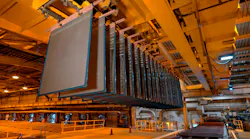 Copper plates in a copper production plant.