Generational Power: Deep Fission's Gravity Reactor Clears DOE Milestone
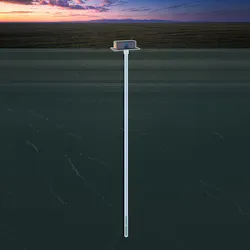
A U.S.-based next-gen nuclear startup which plans to install its reactors down a hole one mile underground is elevating its prospects higher by gaining a key approval from the federal Department of Energy this week.
Deep Fission’s design is advancing under the DOE’s Reactor Pilot Program created by a President Trump executive order to fast-track new nuclear development and meet future energy load challenges. DOE approved the company’s Nuclear Safety Design Agreement (NSDA) for its Gravity nuclear reactor.
The Gravity reactor still requires multiple other approvals before construction and commercial deployment, but the NSDA gives Deep Fission a safety framework to guide future development.
Digging deeper than ever to ensure safety and pressure

Many companies, including small modular reactor (SMR) nuclear designers which achieved criticality under a DOE fast-track plan this summer, are moving forward with regulatory pathways toward deployment. Most of them are planned to be built on the ground or partially underground and may not complete construction until the early 2030s.
What makes Deep Fission’s Gravity reactor potentially unique is that the company will locate it one mile underground and use geothermal and atmospheric pressures to create energy while enhancing safety guardrails.
“A standard pressurized water reactor (PWR) operates at about 160 atmospheres, and underwater you gain roughly one atmosphere for every 10 meters of depth,” Deep Fission co-founder and CEO Liz Muller told EnergyTech.com in response to email questions. “So, at 1,600 meters — just about a mile — the water column naturally provides the operating pressure a PWR needs. Instead of engineering that pressure at the surface with massive steel and concrete structures, we let the water and the force of gravity do it for free.
“The depth brings other benefits as well: a mile of rock provides natural shielding and containment, improves security, and shrinks the surface footprint,” Muller added. “But the fundamental reason is simple physics — one mile is where the pressure is right.”
Pilot reactor work underway in Parsons
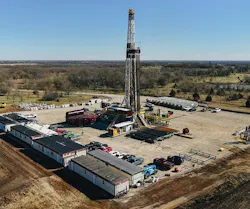
Deep Fission is working on its commercial pilot project at the Great Plains Industrial Park in Parsons, Kansas. The company broke ground on the pilot site in December and drilled its first well to 6,000 feet within which the prototype reactor canister was delivered.
The pilot reactor is being designed to generate about 5 MW once operational, according to the company. Upon scale-up the Gravity Reactor is being planned for producing as much as 15 MW of capacity per unit, using already available low-enriched uranium instead of the higher intensity HALEU and TRISO fuels currently in development for SMRs.
“We're not waiting on a fuel supply chain that doesn't yet exist,” Muller told EnergyTech.
“What really makes it commercially ready is simplicity. By placing the reactor a mile down, we've removed much of the construction risk of a conventional PWR,” she added. “We don't need a containment dome, a separate pressurizer, or a separate emergency core cooling system — the geology, the column of water, and the emplacement of the reactor make those functions integral to the system rather than structures we have to build.”
Deep Fission anticipates that, once its construction schedule is full speed ahead, it would take only about six months to install each reactor. This timeline is a fraction of the decade it took Georgia Power to build out the multi-GW Vogtle 3 and 4 expansions.
“We believe our mile-deep design gives us the ability to move faster in the stages ahead,” Muller said in a statement.
Generational tie to creating new nuclear technology

Another factor making Deep Fission unique among nuclear startups is the generational nature of its leadership. Liz Muller and her father, Rich Muller, co-founded Deep Fission as a first-of-its-kind underground nuclear energy system based on learnings through development of earlier nuclear technologies.
The Mullers also co-founded Deep Isolation, a nuclear waste disposal company. Liz Muller was originally CEO of Deep Isolation and now serves as chair of the board. She also co-founded climate dataset research firm Berkeley Earth and is named on multiple clean energy patents.
Rich Muller serves as chief technical officer for Deep Fission. He is Professor Emeritus of Physics at the University of California-Berkeley and an inventor with more than 80 issued patents. He has been honored with awards from the John D. and Catherine T. MacArthur Foundation, National Science Foundation and the Breakthrough Prize.
The MacArthur “Genius” Fellowship was granted to Rich Muller in 1982 for “pioneering work in experimental cosmology and astrophysics,” according to the Deep Fission website. He also served as senior scientist with the Lawrence Berkeley National Laboratory.
Deep Fission’s website says it has more than 18 GW in non-binding letters of intent to provide power for customers such as data centers and industrial parks.
Last year, the DOE selected 10+ next-gen nuclear advanced reactor designers for its pilot program and encouraged them to achieve criticality with a test by July 4th–the nation’s 250th birthday. Four of those startups–Aalo Atomics, Dependable Energy, Antares Nuclear and Valar Atomics–beat the DOE patriotic deadline.
A fifth advanced reactor designer, Oklo, achieved criticality later in July at its test site in Texas.
State of the Market Report: Power Quality Flucuations
New White Paper by Ubicquia
About the Author
 Rod Walton, EnergyTech Managing Editor
Rod Walton, EnergyTech Managing Editor
Managing Editor
For EnergyTech editorial inquiries, please contact Managing Editor Rod Walton at [email protected].
Rod Walton has spent 17 years covering the energy industry as a newspaper and trade journalist. He formerly was energy writer and business editor at the Tulsa World. Later, he spent six years covering the electricity power sector for Pennwell and Clarion Events. He joined Endeavor and EnergyTech in November 2021.
Walton earned his Bachelors degree in journalism from the University of Oklahoma. His career stops include the Moore American, Bartlesville Examiner-Enterprise, Wagoner Tribune and Tulsa World.
EnergyTech is focused on the mission critical and large-scale energy users and their sustainability and resiliency goals. These include the commercial and industrial sectors, as well as the military, universities, data centers and microgrids. The C&I sectors together account for close to 30 percent of greenhouse gas emissions in the U.S.
He was named Managing Editor for Microgrid Knowledge and EnergyTech starting July 1, 2023
Many large-scale energy users such as Fortune 500 companies, and mission-critical users such as military bases, universities, healthcare facilities, public safety and data centers, shifting their energy priorities to reach net-zero carbon goals within the coming decades. These include plans for renewable energy power purchase agreements, but also on-site resiliency projects such as microgrids, combined heat and power, rooftop solar, energy storage, digitalization and building efficiency upgrades.