Fission vs. Fusion: Two Startups Racing to Re-Engineer Next-Gen Nuclear Infrastructure to Solve Traditional Energy Barriers

Many have thought nuclear energy was on its way out. Instead, a new wave of developers are striving to prove that prediction wrong, shrinking historically massive power capacity into small modular or micro-sized reactors.
Some of those startup entrepreneurs point out that the immense capital expenditure associated with traditional nuclear development can make for slow buildouts due to the physical footprint and extensive safety systems required for building above ground.
“You need a containment dome; you need an emergency core cooling system. Deep Fission is doing nuclear power, small modular reactors (SMRs) and advanced nuclear,” said Liz Muller, co-founder, CEO and board chair of Deep Fission, Inc. during the “Power the Future: The Next Generation of Energy Infrastructure” conference hosted by RedChip earlier this month. “But we're taking a very different approach from what everyone else is doing.”
Muller added that a pressurizer is also required to create the high-pressure environment needed for high-quality electricity, noting that these heavy engineering systems are what essentially make traditional nuclear power expensive and slow to build. To bypass environmental safety concerns and eliminate surface vulnerabilities, companies like Deep Fission are focusing their nuclear efforts deep underground.
What is fission energy?
Nuclear fission, which primarily uses low-enriched uranium (U-235), is the process of splitting a large atom into two smaller atoms, releasing a massive amount of heat, according to the Stanford Understand Energy Learning Hub, part of the Precourt Institute for Energy. This process creates an extremely energy-dense resource used to boil water, create high-pressure steam and spin a turbine to produce electricity.
However, the highly radioactive byproducts produced by nuclear fission must be isolated from people and other living things (the biosphere) for hundreds of thousands of years. Spent fuel rods must be stored deep underground or caverns for the foreseeable future.
To address this, the startup Deep Fission is bypassing traditional above-ground nuclear constraints by placing the small, dense core of a reactor nearly a mile beneath the surface inside a narrow borehole to generate 24/7 carbon-free energy.
“If you use nothing but nuclear power to power your entire life, all the fuel that you need would fit inside a coffee cup,” said Muller. This is really dense stuff, and it's not that which makes it big. If you take that core and you put it in a borehole a mile underground, then you don't need most of the expensive safety systems.”
For added context, the U.S. Department of Energy (DOE) noted in 2022 that all U.S. commercial reactors have generated about 90,000 metric tons of spent fuel since the 1950s. If all were able to be stacked together, it could fit on a single football field at a depth of less than 10 yards (or roughly 30 feet).
Muller shared that being so far underground and surrounded by billions of tons of rock provides the natural underground containment solution her company is seeking via nuclear fission energy. In addition, the vertical shaft of the borehole is filled with a column of water miles deep.
“It provides your heat transfer system, and it's also your emergency core cooling system,” she added. “It also provides the pressure that you want. And so we are able to really simplify the design of a standard pressurized water reactor.”
Deep Fission aims to scale rapidly, bypassing criticality experiments by drawing on the history of commercially generated pressurized water reactors. Pressurized water reactors (PWRs) currently account for 12% of total U.S. electricity generation (two-thirds of the nuclear industry's 18% power generation share).
Scaling PWR technology for fission advancement
The startup has partnered with the U.S. Department of Energy’s (DOE) Reactor Pilot Program, which aims to help expedite research and development efforts of advanced nuclear reactor technologies. Leveraging understood technology, Muller explained, “We know how to drill.”
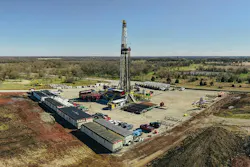
“We can use a combination of oil and gas drilling, but also wastewater disposal drilling, which does larger diameter wellbores. And this means that the technology that we need in order to build the facility where we're going to house our reactor is well understood,” she said.
Deep Fission's Gravity Reactor adapts a mix of theoretical and current PWR tech in the U.S., placing a unit inside a specialized canister to generate intense heat. Using closed-loop geothermal heat transfer methods at the bottom of the borehole, this thermal energy boils water at depth that travels back up to the surface as non-radioactive steam. Similar to geothermal systems, this steam can spin conventional turbines and generators to generate electricity.
What is fusion power?
Another technology with a similar name is nuclear fusion. DOE explains that nuclear fusion occurs when two light atoms slam together to form a heavier atom. An example highlighted is two hydrogen atoms fusing to form one helium atom, releasing net energy without long-lived radioactive waste.
Historically, scientists have yet to sustain these reactions for long periods due to the tremendous pressures and temperatures required. Most mainstream approaches, as noted by CEO Greg Twinney of General Fusion during the RedChip conference, require extreme energy confinement times or extreme plasma densities, leveraging superconducting magnets or high-powered lasers.
The fusion startup views this power source as “the future of energy,” despite commercial deployment of fusion being very distant in present-day reality. During the Power the Future event, Twinney stated the Canadian nuclear fusion company is pursuing this energy form while acknowledging that “for decades it has been something that has been out of reach.”
“We believe that the existing sources of energy that are available are not going to cut it, and something new is needed, and that's where fusion comes into play,” he added.
According to Independent Nuclear News, only a few fusion companies have surpassed the industry-recognized milestone of one kiloelectron volt (1 keV), a unit of energy commonly used in atomic and nuclear physics. General Fusion reportedly achieved this using magnetized target fusion (MTF), an alternative approach designed to connect directly into existing power plant infrastructure.
This magnetized target fusion technology aims to combine magnetic confinement with mechanical compression via a rotating liquid metal wall to solve critical fusion barriers. Through this method, General Fusion reached electron temperatures of more than 1 keV, exceeding 12 million °C, which was verified alongside the government-backed UK Atomic Energy Authority this month.
The commercial approach to fusion
Twinney explained that their engineering approach aims to ensure fusion conditions inside the machine are designed and constrained to be commercially practical.
“We have built a fusion demonstration machine at our facility that is creating 50% power plant-scale plasmas,” Twinney noted. “But think about that 50% power-plant-scale as sort of the fuel source, the internals of the machine.”
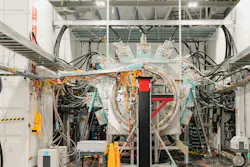
Full power plant-scale plasmas are superheated, ionized gases confined at extreme temperatures (often 100 million °C or more) inside prototype nuclear fusion reactors. The machine prototype built at 50% commercial-scale diameter is General Fusion’s Lawson Machine 26 (LM26) in British Columbia, Canada. General Fusion is developing LM26 to prove out the science behind its MTF approach to fusion as efficiently as possible.
“We use pistons, we use valves, seals, liquid metal systems to compress these plasmas and get these fusion conditions and temperatures,” Twinney claimed. “Overall, other than maybe in movies and things you've heard about over time, Fusion has really advanced over the last number of decades through some challenging scientific milestones.”
General Fusion aims to collaborate on a global scientific basis, leveraging its work at the LM26 facility in hopes of achieving clean, reliable, dispatchable base-load power to the grid with zero carbon emissions, no long-term radioactive waste and no chain reaction.
“It's kind of like you get the benefits of traditional nuclear or fission that people are more familiar with,” he added. “That's why many people talk about fusion as being the holy grail for clean baseload power. We're kind of recreating the conditions of the sun inside the machine.”
Fusion skeptics like Tesla CEO Elon Musk have frequently taken to social media platform X to critique Earth-bound fusion efforts. In December 2025, Musk said, “The sun is an enormous, free fusion reactor in the sky.” Musk has called efforts to make these fusion reactors on Earth a waste of money, adding: “Even if you burned 4 Jupiters, the Sun would still round up to 100% of all power that will ever be produced in the solar system!!”
Other scientific critics have pointed out that the supply of tritium, a scarce isotope, is an issue, essentially “making deuterium-tritium fusion reactors impossible” for commercial scaling.
Despite tremendous financial, engineering and scientific hurdles, both experimentation and private venture capital are flowing into the near-term potential of next-gen fission reactors as well as the faraway promise of fusion. Some other startups working on fusion include Commonwealth Fusion Systems and Helion Energy.
Commonwealth Fusion Systems has introduced a demonstration reactor called SPARC, roughly 80% completed in Massachusetts. Meanwhile, Helion Energy has reportedly demonstrated measurable deuterium-tritium fusion within its 7th-generation prototype, Polaris, and signed a commercial power purchase agreement in 2023 as a historic first with Microsoft to deliver 50 MW of fusion energy beginning around 2028.
About the Author
 Eric Moody