Global Energy Shift: America’s ‘Wake-Up Calls’ May Accelerate the Next-Gen Renewable Transition
The global energy transition is entering what some view as its second major wake-up call in five years, following the geopolitical shock of the Russian-Ukrainian war that began in 2022.
Energy markets during that first crisis were severely disrupted, causing oil prices to spike toward $100 a barrel and sending natural gas prices to historic highs. The second major event, according to Pavel Molchanov, managing director of financial services firm Raymond James & Associates, is this year’s U.S.-Iran conflict, which saw Iran block major oil export pathways through the Strait of Hormuz.
At the “Power the Future: The Next Generation of Energy Infrastructure” conference on Thursday, hosted by RedChip, Molchanov explained that the U.S. has learned a critical lesson: “When oil prices go up, this is a global market; they go up for everybody.”
He views these “wake-up calls” as painful but strategic pivots for the West, as the U.S. currently stands as the world's largest oil-producing nation. It also might be an opportunity for massive carbon-free emission goals to accelerate ahead of this broader, cleaner electrification transition.
“Electric vehicles are not a huge market today in the U.S. Only about 10% of U.S. auto sales are electric, but in Europe it's 30%, and in China it's more than half,” Molchanov said during the conference. “The longer gasoline (prices) here at home stays above $4 a gallon, you're going to see more of a boost in EVs when Americans pay more for gasoline. “That is going to support EV adoption, solar and wind.”
Molchanov noted that while the prices of natural gas remain volatile due to weather and geopolitical conflicts, renewable sectors are often less volatile from these factors, offering scalable domestic market stability.
“Once you have a solar power plant or a wind farm, that electricity is basically free for the life of the asset, which can be the next 20 to 30 years,” he added.
The nuclear marathon: Next-gen reactors shifting to the forefront
On nuclear energy, Molchanov emphasized the importance of viewing the sector “as a marathon, not a sprint.” While solar farms can typically be constructed in a couple of years, advanced nuclear projects can reportedly take five or more years, and traditional large reactors can take up to 10 years to build.
However, once a nuclear reactor is operational, Molchanov claims its electricity output will be very stable and predictable. Despite the large supply chain need for uranium, nuclear is emerging as a resilient, low-volatility solution for powering future large-scale infrastructure, decreasing the effects of geopolitical swings that often influence oil or gas prices.
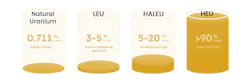
Companies like Nano Nuclear Energy Inc. (NANO Nuclear) are hoping to position themselves to cover three bases that Molchanov spotlighted: tech development, owning and operating power plants and manufacturing next-gen equipment. Furthermore, Nano Nuclear is focusing on scaling its supply of raw materials such as high-assay, low-enriched uranium (HALEU) to fuel these advanced electrification pathways through these categories to accelerate deployment of advanced microreactors once they get the go-ahead to build.
In May, NANO Nuclear acquired fuel transportation business Secured Transportation Services LLC. The U.S. Department of Energy (DOE) later recognized the fuel service subsidiary in October for its important role in transporting enriched uranium from Japan and Venezuela to the U.S.
Currently, the U.S. has no commercial nuclear reactors being built, although several operators intend to reverse the permanent shutdown status of retired facilities. Hyperscalers are hoping to leverage these existing nuclear assets to find the quickest path to carbon-free, baseload power for massive AI energy demands while avoiding the expense of building new capacity from scratch.
Powering these cloud-based data facilities could reportedly trigger one of the most expansive nuclear buildouts in decades.
The overarching mission is to meet the current administration’s ambitious “nuclear renaissance” goal—aiming to reach 300 GW by 2050 through advanced nuclear deployment. As for advanced microreactors, they are being designed to work like microgrids, enabling them to operate off-grid to power critical energy infrastructure and isolated systems.
Small modular reactors (SMRs) are being constructed to provide higher power output and also aim to work off-grid. Only two SMRs are operational globally: Russia’s floating SMR barge, providing electricity to a remote Arctic town, and China’s land-based SMR plant feeding power directly into its national grid.
But microreactors, generally classified as 20 MW of electric power or less, are being designed to involve far less on-site construction activity to speed up deployment timelines, acting as small, fully assembled individual nuclear batteries intended to plug directly into localized grids.
De-risking future reactor deployments
Along with earlier climate mandates for clean energy solutions in the U.S., Matthew Barry, director investor relations at NANO Nuclear, noted this has amounted to unprecedented bipartisan support helping advance these next-gen solutions to the market. This involves new streamlined pathways by the Nuclear Regulatory Commission (NRC) that differ from traditional licensing established many years ago for gigawatt-scale traditional nuclear power plants.
Barry stated during the Power the Future conference that NANO’s KRONOS MMR (micro-modular reactor) is focusing on providing 15 MW of electricity per unit. He added that NANO’s mission is to maximize fuel capacity and unit cooling systems through advanced technology.
The Kronos MMR, a high-temperature gas-cooled microreactor, uses technology the company claims will help enable them to co-locate their reactors directly at data centers, mining projects, military bases and industrial sites. According to Barry, the underlying TRISO fuel technology has been qualified by DOE, backed by over two decades of testing data.

The advanced nuclear company has progressed in deployment efforts of its KRONOS MMR at the University of Illinois Urbana-Champaign (UIUC) after the NRC formally accepted UIUC’s construction permit application for review. As of October, the company is going through ongoing technical audits in preparation for the environmental assessment in the first half of 2027.
Fewer than 10 U.S. companies have reached or surpassed this specific regulatory stage for an advanced (non-light-water) reactor or microreactor.
NANO Nuclear's specialized subsidiary, Secured Transportation Services LLC, manages logistics across the entire nuclear fuel cycle. This pipeline spans from transporting mined uranium to conversion into uranium hexafluoride (UF6 gas), managing logistics through its transition to enriched uranium, and ultimately facilitating delivery for fabrication into its final TRISO fuel form.
“We are incredibly excited about not only the capabilities that they provide us, the growth trajectory to expand their market share in not only transporting the fuel across for all these steps, but for something that they've really specialized in, which is transporting and handling the waste,” added Barry. “Having these capabilities in-house is not only important for de-risking future reactor deployments, but also ultimately providing us ancillary revenue around every single reactor deployment that we have in the future.”
Overcoming fuel lines, uranium conversion deficit
NANO Nuclear highlights uranium conversion, the critical process of turning yellowcake from mining locations into UF6 gas, as an “underappreciated bottleneck.” The U.S. relies heavily on only one operating commercial uranium conversion plant: the Solstice Advanced Materials’ Metropolis Works Facility in Metropolis, Illinois.
While annual U.S. demand ranges from 8,000 to 10,000 metric tons per year, the Solstice Advanced Materials plant's current output sits at 7,000 to over 10,000 metric tons, leaving very tight margins in this broader nuclear renaissance push.
"When we think about today, there's a deficit in the United States, and that's not even factoring in future restarts, which we continue to hear additional announcements on,” Barry said.
NANO Nuclear is positioning itself to rely on fuel lines from Standard Nuclear, which DOE has conditionally selected as one of five companies in 2025 as part of its Fuel Line Pilot Program. The program aims to establish a domestic nuclear fuel supply chain for testing new reactors.
Following the bankruptcy of Ultra Safe Nuclear Corporation (USNC), Standard Nuclear acquired the company's historic fuel data. Meanwhile, NANO Nuclear secured USNC's advanced microreactor intellectual property, allowing them to leverage these DOE-backed fuel lines to power the Kronos MMR.
“We could potentially bypass current grid constraints as an off-grid or behind-the-meter solution. There's a significant value to that, and a premium being paid for that type of power solution today,” Barry concluded.
About the Author
 Eric Moody