DOE's Energy Dominance Financing Lends Vistra $4.2B to Fuel Nuclear Output
Key Highlights
- - Vistra operates six reactors generating over 6.5 GW, powering more than 3 million homes, with plans to expand capacity through strategic acquisitions and PPAs with hyperscalers like Meta.
- - The funding aims to bolster the U.S. nuclear renaissance, targeting 300 GW of nuclear capacity by 2050, and emphasizes the role of existing reactors in providing reliable, carbon-free power.
- - Power uprates, approved over 170 times since the 1970s, are key to increasing output from current reactors, supporting the goal of affordable, around-the-clock energy.
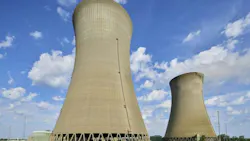
The U.S. Department of Energy’s (DOE) Office of Energy Dominance Financing (EDF) is lending $4.2 billion to independent utility-scale generator Vistra Corp. to boost its nuclear power generation goals and fuel a broader nuclear expansion vision amid the rise of AI and data centers.
U.S. Energy Secretary Chris Wright announced the conditional loan commitment on Monday at Vistra's 1.3-GW Perry Nuclear Power Plant along Lake Erie in Ohio. The move will help finance nuclear uprates and enable modernization efforts to bring new, emissions-free generating capacity at several of Vistra's nuclear stations.
The investment advances a previous executive order by President Donald Trump aimed at increasing reactor-powered generation and securing civil nuclear supply chains. According to DOE, these efforts will preserve nearly 4 GW of reliable baseload power and add 433 MW of new nuclear capacity to support the PJM region without requiring expensive new transmission corridors or equivalent new generation resources.
DOE noted that this public-private partnership will support the plants’ operation for an additional 20 years beyond their existing licenses. However, conditional requirements outlined show that Vistra must satisfy certain technical, legal, environmental and financial conditions before financing is definitively extended.
“By getting more power out of the nuclear plants we already have, we can deliver more affordable, reliable, around-the-clock energy for American families and businesses,” said DOE Secretary Wright in a statement.
In total, the Texas-based company operates six reactors at four U.S. plants that generate more than 6.5 GW of electricity, enough to power over 3 million homes. EDF’s conditional loan commitment also reportedly includes an option to finance potential future uprates at Vistra’s 2.4-GW Comanche Peak Nuclear Power Plant in Somervell County, Texas.
Hyperscaler demand inspiring utility-scale M&A
As operators seek more round-the-clock energy, companies like Vistra are reshaping their business through large-scale acquisitions and new long-term contracts with hyperscalers.
Earlier this year, Vistra agreed to acquire North Carolina independent power producer Cogentrix Energy for a net purchase of $4 billion from Quantum Capital Group. The deal includes 10 natural gas-fired power plants totaling roughly 5,500 MW of capacity as the company looks to continue building out its electrification output portfolio across the U.S. to meet rising power demand.
Vistra also secured multiple power purchase agreements (PPAs) with Facebook parent company Meta to provide more than 2.6 GW of nuclear power from three different reactor plants to support its computing and AI load.
Under the terms of those PPAs, 2,176 MW of nuclear power will be sourced from Vistra’s 1.3-GW single-unit Perry plant and the 900 MW Davis–Besse Nuclear Power Station in Oak Harbor. In tandem with the Ohio facilities, the two-unit 1.9-GW Beaver Valley Power Station in Pennsylvania will also support 433 MW of capacity uprates to add carbon-free energy to the grid.
Vistra currently supplies power to the largest regional U.S. grid, operated by PJM Interconnection, which stretches from Illinois to Washington, D.C., serving 67 million people across a 13-state territory.
Nuclear renaissance gains momentum in Age of AI
Hyperscalers are hoping to leverage these existing nuclear assets to find the quickest path to carbon-free, baseload power for massive AI energy demands while avoiding the expense of building new capacity. The mission is to meet the Trump administration’s “nuclear renaissance” goal—aiming to reach 300 GW by 2050 through advanced nuclear deployment.
Currently, the U.S. has no commercial nuclear reactors being built, although several operators intend to reverse the permanent shutdown status of retired facilities. However, Wright explained at a 2025 conference hosted by the American Nuclear Society that DOE’s Energy Dominance Financing Office has “significant lending authority” and “by far the biggest use of those dollars will be for nuclear power plants.”
Since the 1970s, utilities have utilized power uprates to increase the power output of their existing nuclear plants, according to the U.S. Nuclear Regulatory Commission. These uprates are typically done by adding low-enriched uranium fuel or implementing major plant modifications, such as replacing main turbines. As of 2022, the NRC highlighted that it had approved more than 170 uprates to generate more power from U.S. reactors.
“These investments will extend the life of existing reactors, increase nuclear generation, and deliver abundant, around-the-clock power to lower costs and power American prosperity for decades to come,” said Energy Dominance Financing director Gregory A. Beard.
Read more on: America's Nuclear Comeback Depends on a Domestic Uranium Supply Chain
About the Author
 Eric Moody