Capitalizing on Future Nuclear Energy: Can Environmental Credit Markets Generate Next-Gen Capacity?

The U.S. quest to fuel next-gen reactor designs such as small modular reactors (SMRs) is gaining momentum across the energy sector. Regulatory licensing is aiming to become more streamlined in reaching 300 GW of new nuclear power by 2050.
In May, the Trump administration highlighted the U.S.’s next-gen nuclear activity a year after issuing an executive order (EO) “to bring about an American nuclear renaissance.” A reactor pilot program under the Reforming Nuclear Reactor Testing at the Department of Energy (DOE) is focusing on fast-tracking commercial licensing and unlocking private-sector investment to meet the nation’s growing demand for clean, reliable energy.
DOE states that nuclear fuel supply is being reinforced to meet these growing future energy demands while retired nuclear plants are on target to restart.
Examples include global investment firm Brookfield partnering with nuclear project developer The Nuclear Company (“TNC”) to form a new joint entity. The new entity will specialize in deploying Westinghouse nuclear reactor technology, which could help revive the South Carolina reactor project previously known as V.C. Summer Nuclear Units 2 and 3, shut down nearly 10 years ago.
In June, DOE and Westinghouse Electric, a global nuclear power plant developer, unveiled plans to collaborate under a conditional commitment of $17.5 billion in obligated funds to finance the purchase of up to 10 Westinghouse AP1000 units. It’s part of President Trump’s Reinvigorating the Nuclear Industrial Base EO to have 10 new large nuclear reactors with complete designs under construction by 2030.
Driven by government incentives, demand signals have grown among hyperscalers and nuclear developers seeking regulatory validation. Yet, while policymakers have highlighted the importance of this advanced nuclear landscape, fully funding the deployment of next-generation SMRs remains a larger task for voluntary markets buying and selling carbon credits.
Nuclear procurement strategies
For next-gen nuclear development to be successful toward a 2050 goal, the drive to add more nuclear capacity must continue long after this current administration. Ben Gerber, president and CEO of CleanCounts, explained that the growth he and his team are tracking in nuclear generation means data centers likely need 24/7 matching capabilities with their nuclear procurement strategies.
This means the energy attribute certificates (EACs) they buy must precisely mirror the clean energy they actually consume around the clock.
“Nuclear developers, operators and buyers across the market—including teams repowering previously decommissioned plants—view this as a genuine opportunity,” CEO Gerber told EnergyTech in an exclusive Q&A. “The precedent is clear: EAC demand contributed to the buildout of gigawatt-hours of renewable capacity on the grid over the past two decades.”
CleanCounts, a U.S. renewable energy registry, tracks generation projects across North America. The Minneapolis-based nonprofit also verifies nuclear EACs, comparable to digital receipts that provide proof someone's electricity came from a carbon-free nuclear power plant.
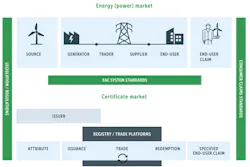
When purchased, these EACs support nuclear plants financially, providing them with additional funding to keep them operational 24/7 to meet the growing clean energy needs of hyperscalers, AI data centers and other large-scale infrastructure operations. According to the U.S. Environmental Protection Agency (EPA), these certificates serve as an official tracking mechanism for emissions claims on a shared grid.
A common EAC in North America, the EPA notes, is the renewable energy certificate, widely used by electricity suppliers and consumers. Although typically used for wind and solar, nuclear plants rely on a similar class of EACs.
Under this framework, nuclear plants put 1 MWh of clean electricity on the grid and receive one EAC in exchange for producing that clean energy.
Once a company buys that certificate, it is canceled, preventing anyone else from claiming or double-counting that energy use. That is where CleanCounts comes in to establish that tracking system.
Voluntary markets and EACs aiding a nuclear renaissance
Gerber states that voluntary markets could help fuel this “nuclear energy renaissance” and increase corporate investment to encourage the development of next-gen reactors.
“That mechanism worked because it created a transparent, tradable signal for clean generation,” Gerber added. “Nuclear EACs can do the same work now—they preserve existing 24/7 clean capacity that might otherwise retire and create the market incentive to bring new clean, firm generation online.”
Gerber states that many factors continue to drive demand in both voluntary and compliance EAC markets. But the grid needs firm, round-the-clock clean power, “not just incremental renewable additions.”
These voluntary private markets have been viewed by groups such as CleanCounts as a way to help fuel a true “nuclear energy renaissance” and increase corporate investment that encourages the development of next-gen reactors.
“Voluntary markets work because they let buyers signal preference ahead of regulation,” said Gerber. “Corporate customers and hyperscalers willing to pay a price premium for firm, clean power establish a price point developers can underwrite—the same mechanism that built the renewable buildout over the past two decades.”
He adds the commercial signal from buyers gets projects financed, while registry infrastructure makes the resulting claims defensible. Both aspects, Gerber notes, must be in place for a “nuclear renaissance” to become reality.
Mechanism options: Tariffs and PPAs
DOE provides an overview of federal off-site energy procurement options being adopted into an evolving landscape to include nuclear development. Two primary examples shaping commercial operations include utility green tariffs and off-site power purchase agreements (PPAs).
Utility green tariffs allow large-scale corporate buyers to purchase and bundle clean energy resources from their utility. While traditional for wind or solar, utilities are proposing new, modified frameworks to bundle nuclear baseload power.
Meanwhile, off-site PPAs provide vital financial backing. Although most PPAs don't power the company directly, the investment brings more new clean energy onto the overall grid, helping developers offset expenses and bypass long interconnection queues.
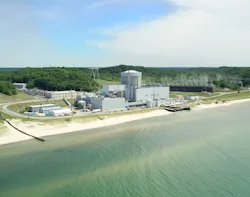
Gerber states a project to watch for is Palisades, a shuttered plant in Michigan returning to service on the strength of long-term offtake commitments.
“If voluntary demand can de-risk a restart, it becomes the template for the next decommissioned asset, and for the first-of-a-kind SMR projects that face the same cost and schedule risk traditional project finance prices punitively,” he added.
The corporate climate gap for advanced reactors
However, these traditional procurement frameworks reportedly offer limitations for nuclear development. These barriers include lengthy regulatory timelines, strict state restrictions and accounting for total yearly generation rather than real-time, 24/7 matching sought by data centers in today's market deployment.
“There is clear market demand for all electrons now, especially clean electrons that a customer can rely on 24/7. The issues are really permitting and interconnection,” said Gerber. “The market is really looking for replicable models of SMRs deployed within or adjacent to existing nuclear power plants, which helps speed up permitting and NIMBY issues.”
As far as regulatory support for SMRs, Gerber hopes that regulators view them as just smaller versions of the bigger, more capital-intensive nuclear facilities. No commercial microreactors or SMRs are yet operational in the U.S., but multiple demonstration projects are underway for deployment in the 2020s and early 2030s.
“Once that first and second project are successful in the short-term, it will be exciting to see the industry learn from those examples and quickly scale,” Gerber added.
Grid officials and regulators are evaluating this growing energy need alongside hyperscalers and AI data centers wanting this real-time clean energy demand brought to match their actual electricity consumption 24/7. This, Gerber explains, is leading to regulators moving toward tighter, more granular matching requirements.
Examples of this are The Greenhouse Gas (GHG) Protocol's Scope 2 revision, which proposes that EACs count only within the market boundary where consumption occurs. Another is the Science Based Target SBTi's Version 2.0 standard, requiring deliverability and geographic matching, not just annual reconciliation.
Both frameworks are global regulated standards of how corporate emissions from purchased electricity and other energy sources are calculated.
“Data centers have been ahead of the curve, asking for true 24/7 clean matching or emissionality calculations that evaluate the actual impact of claimed resources,” Gerber explained. “A REC purchased from a distant grid region, netted out over a calendar year, no longer satisfies that bar under 24/7 matching. Nuclear fits that requirement well, because it runs firm and around the clock.”
But grid officials have been supportive, Gerber noted. They need more generation online, and they need confidence that new nuclear capacity, repowered or newly built, translates into credible claims rather than “accounting ambiguity.”
About the Author
 Eric Moody