DOE Backs Westinghouse through $17.5B Loan to Fast-Track 10 Large-Scale U.S. Nuclear Reactors
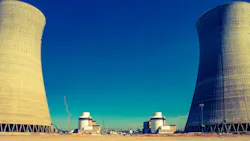
Westinghouse Electric Co. is making strides with the U.S. government to accelerate next-gen nuclear generation at scale through a program supporting investment in the nation’s nuclear supply chains.
On Tuesday, the Department of Energy (DOE) and Westinghouse Electric, a global nuclear power plant developer, unveiled plans to collaborate under a conditional commitment of $17.5 billion in obligated funds to finance the purchase of up to 10 Westinghouse AP1000 units.
Through DOE’s Office of Energy Dominance Financing (EDF), the $17.5 billion American Nuclear Supply Chain Loans will help finance five eligible projects, with each project supporting two reactors at a site, according to a release.
Each AP1000 unit has a generation capacity of up to 1.1 GW and is currently, as DOE explains, the only fully designed and licensed advanced commercial reactor operating in the U.S. That combined power output of all 10 reactors can provide enough electricity to power nearly 10 million American households, according to Westinghouse.
This distinction is why DOE considers these advanced reactors to be long-lead-time items (LLI), as it aims to advance the purchase of LLI to accelerate project deployment timelines to rebuild America’s commercial supply chain. It’s part of President Trump’s Reinvigorating the Nuclear Industrial Base executive order to have 10 new large nuclear reactors with complete designs under construction by 2030.
Under this commitment, Westinghouse will sponsor up to five eligible utilities and energy companies nationwide to procure the advanced reactors at a fixed price. DOE highlights that LLI makes up the complex components of a nuclear power plant that require the longest time for manufacturing and delivery.
Westinghouse and its selected utility partner(s) will jointly own each project. Both will be required to fully commit their project equity, $500 million each ($1 billion total per project), as collateral, before accessing DOE loan funds.
Westinghouse has signed letters of intent with seven potential partners, not yet publicly announced, each with identified project sites. This strategy is projected to accelerate the deployment of these 10 advanced reactors by up to three years nationwide, leveraging the loan facilities’ bulk equipment purchase order structure.
“America has always won when it thinks big and builds for the future. If we want to lead in artificial intelligence, advanced manufacturing, and the industries that will define the next century, we need more American baseload energy,” Westinghouse CEO Dan Sumner said in a statement.
The AP1000 is a pressurized water reactor design with some of the passive safety features and modularity in the design of prospective SMR units. No commercial microreactors or SMRs are yet operational in the U.S.
There are six AP1000 reactors currently operational worldwide, with 14 additional reactors under construction and five more under contract.
These reactors have been selected for foreign nuclear energy programs in Poland, Ukraine and Bulgaria, with consideration at multiple sites in Europe, the Middle East and North America.
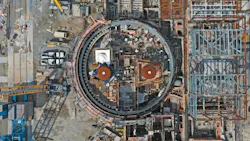
In May, global investment firm Brookfield and nuclear project developer The Nuclear Company formed a new joint entity to specialize in deploying Westinghouse’s AP1000 reactors and the potential revival of two partially constructed AP1000 units in South Carolina. Those reactor units were part of the ill-fated V.C. Summer nuclear unit expansions, which were abandoned nearly a decade ago amidst an era of bankruptcy and financial loss for the industry.
Westinghouse, a contractor at the time for the South Carolina project, would eventually go into Chapter 11 bankruptcy in 2017, but was later acquired by Brookfield Business Partners in 2018 with operations in 2019. Despite that, the rising power demand from industrial and supercomputing loads has created a so-called next-gen nuclear renaissance.
Public and private investment from hyperscalers like Amazon, Meta and Google continues to flow into the next-gen nuclear market, even though SMRs and microreactors are not yet a reality.
About the Author
 Eric Moody