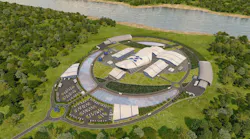
Utah Lab to Host NuCube’s High-Temperature Microreactor Demonstration
Key Highlights
- NuCube expects its demonstration at the Utah San Rafael Energy Lab to be completed by 2027.
- A 250-kW furnace will simulate the high temperatures expected from the NuSun reactor.
- NuCube’s proposed NuSun design is a 15-MW solid-state power conversion microreactor intended to run for up to 30 years without refueling.
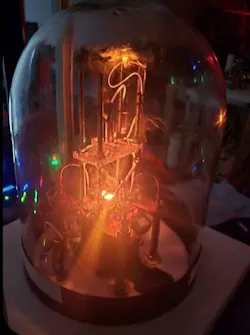
A fast-moving microreactor startup is quickening the pace as it moves toward demonstration of next-gen nuclear technology in tandem with several nearby universities and research partners in the U.S. Mountain West region.
NuCube Energy plans to have demonstrated and tested the infrastructure designed to handle its NuSun reactor technology by 2027. The project will use a 250-kW furnace to simulate the intense heat expected from the NuSun reactor and will take place at the Utah San Rafael Energy Lab (USREL) in Orangeville, Utah.
This demonstration will approximate the 1,100 degrees Celsius generated from a future microreactor and learn how that heat is transferred and used for both power generation and industrial processes. NuCube is working with researchers from Brigham Young University, USREL and Idaho State University on moving the NuSun design from theory to siting, testing and operations.
Canadian Nuclear Laboratories is also aiding the effort to validate heat-pipe performance above 900 degrees Celsius. This can help further NuCube in its licensing approval pathway.
“NuCube expects the project to be completed by 2027 and is a part of the company’s ongoing memorandum of understanding with the Utah Office of Energy Development, which manages the USREL, to engage in good faith work towards the siting of a NuCube-supplied micro fission reactor at the USREL,” reads a NuCube response to emailed questions from EnergyTech.com.
In another announcement earlier this month, Taiwan’s National Tsing Hua University signed a technical exchange agreement with NuCube to help develop, research and possibly deploy the modular microreactor technology to that island nation in the future. The reactor work also could aid in Taiwanese nuclear medical research.
NuCube touts its NuSun microreactor design as the world’s first solid state power conversion reactor which might produce for 30 years without refueling. In theory it will be smaller and easier to transport while generating 15 MW per unit at capacity.
In April, the U.S. Department of Energy’s Office of Nuclear Energy and the National Reactor Innovation Center selected NuCube Energy and Idaho State University among its first developers in the newly established Nuclear Energy Launch Pad. The other next-gen nuclear startups selected by DOE were Deployable Energy, General Matter and Radiant Industries.
The Nuclear Energy Launch Pad is the Trump Administration’s new name for the longtime DOE Reactor Pilot and Fuel Line Pilot programs.
Artificial Lift Optimization Begins with Data--Not AI
New White Paper by Siemens
About the Author
 Rod Walton, EnergyTech Managing Editor
Managing Editor
For EnergyTech editorial inquiries, please contact Managing Editor Rod Walton at [email protected].
Rod Walton has spent 17 years covering the energy industry as a newspaper and trade journalist. He formerly was energy writer and business editor at the Tulsa World. Later, he spent six years covering the electricity power sector for Pennwell and Clarion Events. He joined Endeavor and EnergyTech in November 2021.
Walton earned his Bachelors degree in journalism from the University of Oklahoma. His career stops include the Moore American, Bartlesville Examiner-Enterprise, Wagoner Tribune and Tulsa World.
EnergyTech is focused on the mission critical and large-scale energy users and their sustainability and resiliency goals. These include the commercial and industrial sectors, as well as the military, universities, data centers and microgrids. The C&I sectors together account for close to 30 percent of greenhouse gas emissions in the U.S.
He was named Managing Editor for Microgrid Knowledge and EnergyTech starting July 1, 2023
Many large-scale energy users such as Fortune 500 companies, and mission-critical users such as military bases, universities, healthcare facilities, public safety and data centers, shifting their energy priorities to reach net-zero carbon goals within the coming decades. These include plans for renewable energy power purchase agreements, but also on-site resiliency projects such as microgrids, combined heat and power, rooftop solar, energy storage, digitalization and building efficiency upgrades.
Related
 nuclear_fission_dreamstime