'Energy in a Box': Nuclear Startup Radiant Secures $750M Contract to Deploy 15 Portable Microreactors Across U.S. Army Bases
Advanced nuclear startup Radiant is entering into a binding agreement with the U.S. Army for up to $750 million to develop and deploy 15 microreactors.
In partnership with the Defense Innovation Unit (DIU), part of the U.S. Department of Defense, Radiant announced on Wednesday plans for its Kaleidos 1-MW portable nuclear microreactor through the Army’s Janus Program. The California-based company is focusing on scaling its plug-in-ready, transportable commercial nuclear microreactor, designed as a zero-emission alternative to heavy industrial diesel generators.
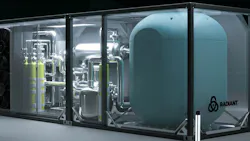
Transportable by land, sea or air and deployed directly at customer sites, Radiant claims its Kaleidos reactor provides up to five years of power before needing to refuel and is engineered for a 20-year operating lifecycle. The company describes Kaleidos as “energy in a box,” eliminating site-specific construction efforts and requiring no cooling water, unlike traditional nuclear plants.
Radiant states it will also manage fueling, refueling and spent-fuel storage at its own facilities.
“The U.S. Army is a savvy customer. They have the world’s top nuclear experts and know what to look for in a partner,” said Tori Shivanandan, president and COO of Radiant, in a statement.
Radiant is among five companies the U.S. Army selected to build and operate nuclear microreactors at military installations. Operating under the Janus Program, initiated by executive order in 2025, the initiative will award up to a combined $2.2 billion through fiscal year 2031 for the development and deployment of next-gen nuclear reactors on domestic bases.
At least one operational microreactor under the program is targeted for deployment at a domestic base by no later than September 30, 2028.
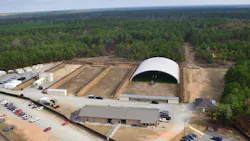
The selected companies, which will own and operate the reactors under this program, include Antares Nuclear, Inc., BWXT Advanced Technologies, General Atomics Electromagnetic Systems and Westinghouse Government Services. As part of Radiant's initial rollout, deployment is slated for the Army’s base in Fort Benning, Georgia.
“The Janus Program is about transitioning from designs and experiments to reliable commercial hardware which secures our energy independence," said Dr. Jeff Waksman, principal deputy assistant secretary of the Army for Installations, Energy and Environment.
According to Radiant, the $750 million investment is one of the largest contracts ever issued by DIU across its portfolio, and the largest award within the Janus Program. Radiant was chosen after extensive evaluation of reactor design under the country’s test campaign at the Idaho National Laboratory (INL) DOME facility.
The U.S. Department of Energy reportedly awarded Radiant exclusive access to the INL facility for a full year following its upgrades for small modular reactor testing in 2026. Radiant’s 15 microreactors aim to enable the Army to deploy nuclear power across multiple locations.
“Operating on military installations first gives us the reliability track record to unlock commercial deployments, and the resulting, much larger commercial volume drives down costs, letting the government buy at scale for less,” said Mike Starrett, chief commercial officer at Radiant.
Expanding on the Army-standard nuclear reactor domestic base goal, Radiant will reportedly manufacture a fleet of 15 advanced reactors by 2030 under this contract to support defense installations and other critical national security efforts. Ultimately, this partnership aims to secure reliable, independent power for mission-driven energy infrastructure, effectively decentralizing the grid and providing resilient backup power.
No commercial microreactors or SMRs are yet operational in the U.S., but multiple demonstration projects are underway for deployment in the 2020s and early 2030s.
About the Author
 Eric Moody