3 Universities Form Nuclear Alliance to Tackle Next-Gen Workforce Gap through Cross-Campus Virtual Training
Small modular reactors (SMRs) and microreactors are emerging to meet a national “nuclear resurgence” after decades of flat growth. However, while America’s demand for electricity is surging, the nation faces a severe shortage of nuclear-literate engineers, managers and policymakers.
To bridge this gap, three public research universities—Arizona State University (ASU), Purdue University and the University of Tennessee, Knoxville (UTK)—are uniting to address this growing need to scale nuclear workforce development through a newly formed alliance called the New Nuclear Academic Consortium (NNAC).
The NNAC aims to combat a looming workforce shortage driven by a large portion of the current workforce approaching retirement, nuclear projects located in remote areas and difficulty attracting qualified applicants. According to the consortium, these challenges are the driving factors in establishing both a regional and national ecosystem to deploy, manage and scale the next generation of nuclear field graduates.
In traditional nuclear engineering programs, the NNAC notes that specialized PhDs and design engineers are primarily produced. In contrast, advanced nuclear fields typically require professionals who can navigate complex supply chains and safety regulations to deploy potentially thousands of decentralized reactors.
"The future of new nuclear energy is unfolding in front of us, and the nation will need more graduates who are prepared to enter the nuclear industry,” said Kyle Squires, dean of ASU’s Fulton Schools of Engineering, in a statement. "This new consortium brings together three top public universities, each with tremendous expertise and reach, to increase the number of engineers prepared to work in the new nuclear industry and create courses and microcredentials that can be accessed by engineers at any U.S. university."
Each university’s distinct contributions
The NNAC concept, which originated at ASU, is based on data-driven policy modeling and virtual environmental tools. ASU's primary initial contribution in the alliance will be producing three to five undergraduate micro-certificates this year to equip engineering students with nuclear fluency.
As for UTK, the nuclear engineering-focused institution will strengthen its ability to transition standalone bachelor’s, master’s and PhD nuclear programs and seamlessly integrate research with Oak Ridge National Laboratory.
East Tennessee is at the epicenter of the current U.S. administration’s nuclear resurgence, with over 150 nuclear-related companies within a 50-mile radius of Knoxville.
Highlighting this regional momentum, engineering and tech firm Amentum, which recently opened its global nuclear headquarters in Oak Ridge, Tennessee, is advancing next-gen energy capabilities and launching a nuclear scholars program. Headlined by a five-year, $500,000 investment, Amentum will debut its first student cohort stateside in late 2026.
The initiative will establish a synchronized scholarship pipeline alongside UTK to develop next-gen curriculum for the workforce needed for the world’s growing nuclear energy demands.
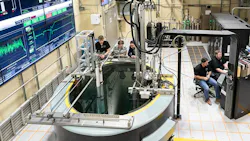
Purdue will leverage its current nuclear engineering program under the NNAC alliance to scale its U.S. Nuclear Regulatory Commission-licensed Purdue University Reactor Number One (PUR-1) facility. The facility features a fully digital safety and control system considered at the forefront of research reactor innovation in the U.S. for education and workforce development.
Purdue will provide licensing skills and the reactor data from physics models to develop its in-house digital twin model of PUR-1. Meanwhile, ASU will contribute its own 3D modeling knowledge in virtual training models to make these types of simulations digitally accessible for other colleges and universities, offering an innovative regulatory certifications pathway.
Once launched, the alliance plans to invite additional research universities to join over the next six to 12 months to adopt the consortium-built micro-certificates for undergraduate students.
“Our goal is to give students meaningful exposure to real nuclear systems and hands-on advanced digital and cyber-physical technologies so they are prepared not just to design the next generation of reactors, but to safely deploy and operate them at scale," said Stylianos Chatzidakis, assistant professor in Purdue’s School of Nuclear Engineering and one of the NNAC’s founding partners.
About the Author
 Eric Moody