Syntropic Taps UNIGRID's Tech to Advance Domestic Sodium-Ion BESS Supply Chain
Energy storage developer Syntropic Power is working to commercialize the sodium-ion battery technology of UNIGRID, possibly creating another alternative to lithium-ion in the U.S. stationary battery market.
This joint effort, announced this week, will integrate UNIGRID's sodium chromium oxide (NCO) chemistry into Syntropic's energy storage system hardware. The partnership is targeting 1 GWh of NCO-based energy storage by 2027 through a Foreign Entities of Concern (FEOC)-free supply chain, according to a release.
According to research firm Wood Mackenzie’s U.S. Energy Storage Monitor Q2 2026 report, BESS developers with mature pipelines are securing supply agreements with domestic manufacturers. Over the next two to four years, sourcing components free from Foreign Entities of Concern is emerging as a critical market bottleneck.
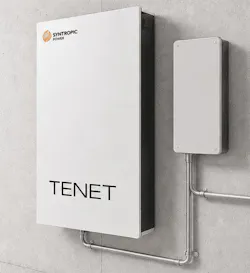
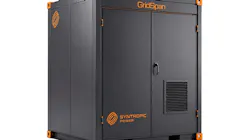
North Carolina-based Syntropic states it will incorporate both its residential “Tenet” storage system and its “GridSpan” platform designated for large-scale stationary applications. Syntropic will design, manufacture and deploy these battery energy storage systems based on the independently validated cell chemistry of California-based UNIGRID.
The company claims the combination of sodium chromium oxide is distinct from other conventional chemistries utilized by prominent Chinese manufacturers that combine sodium nickel iron manganese oxide (NFM) or sodium iron pyrophosphate.
UNIGRID highlights “ultra-low cost” as a primary benefit of chromium, which is one of the most widely used industrial metals after aluminum. Unlike many critical minerals, chromium is non-toxic for safe handling and not classified as a hazard.
According to UNIGRID, its advantages in BESS development include high power output and narrow voltage curves for system integration. By replacing iron, nickel and manganese with exceptionally abundant trivalent chromium, UNIGRID claims this offers both affordability and system stability, preventing internal decomposition that generates oxygen and heat.
“UNIGRID’s NCO chemistry combines high round-trip efficiency, high power capability, strong cycle life performance and distinctive thermal safety behavior, providing the foundation for a GridSpan platform designed to operate without active cooling,” said Matt Huber, chief technology officer of Syntropic Power, in a statement.
Huber notes that the battery testing trials commissioned by Syntropic in New York at the Rochester Institute of Technology Battery Development Center on UNIGRID’s NCO cells provided the independent data needed to measure the performance metrics for stationary energy storage. Key takeaways included a mere 2.3% capacity loss across varying temperature ranges, alongside "highly beneficial behavior" during charging sessions.
The data reportedly revealed that after 1,000 cycles at full depth of discharge, the batteries sustained over 99% of their original capacity.
“As surging power demand from AI and electrification collides with extreme weather and rising energy costs, the modern grid requires unmatched reliability and thermal resilience,” said UNIGRID CEO Darren H. S. Tan. “Partnering with Syntropic allows us to scale this robust technology to deliver the dependable power infrastructure North America urgently needs.”
About the Author
 Eric Moody