Power Electronics to Bolster Domestic Inverter Production at 40-GW Houston Campus

Global energy conversion tech firm Power Electronics recently broke ground on its future 53-acre campus in Houston, Texas, to expand its U.S. industrial footprint and deliver up to 40 GW of annual production capacity.
The 850,000-square-foot manufacturing and logistics facility is being designed to consolidate multiple phases of inverter production and operations into a single resource hub for the needs of multi-MW solar farms across the U.S. An inverter converts direct current (DC) electricity, generated by solar panels and batteries, to alternating current (AC) electricity that the electrical grid uses.
Power Electronics, headquartered in Spain, engineers and provides the hardware components for these devices that manage and control the electrical flow during this DC-to-AC conversion. According to a company release, the 53-acre industrial campus will include two buildings roughly 150,000 and 700,000 square feet, respectively, for logistics, electronics manufacturing and other key functions.
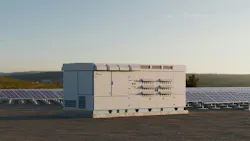
Although the company has not yet announced a specific completion or opening date for this facility, it is expected to bring more than 400 new jobs in the Houston area once fully operational. Company leadership and Houston officials gathered on Sept. 24 for a groundbreaking ceremony to recognize the new American chapter by Power Electronics in establishing its “most automated inverter production site” to date.
The ambitious manufacturing plans by Power Electronics echo similar moves by other infrastructure and equipment firms in the U.S. Hitachi Energy is investing in a planned $528 million transformer factory in Gallman, Mississippi. ARRAY Technologies, a global provider of solar tracking technology, is also making headway domestically after recently opening its $50 million New Mexico manufacturing facility.
These moves arrive at a pivotal moment for building domestic supply chain resiliency, driven by a global decline in new resource discoveries and the urgency to scale up infrastructure required to power next-gen clean energy systems and high-tech applications. Power Electronics explained that accelerating demand from utility-scale solar, storage and AI data centers continues to intensify the need for broader electrification matched with reliable power conversion solutions.
This growing movement is designed to ultimately reduce dependence on non-allied foreign sources such as China. Power Electronics explained that accelerating demand from utility-scale solar, storage and AI data centers continues to increase the need for broader electrification matched with reliable power conversion solutions.
“For the first time in many years, the United States will be able to meet its growing need for sustainable power generation capacity and energy resilience through local manufacturing, supported by the most advanced technology in the world,” said Power Electronics CEO David Salvo in a statement. “Our 40-GW Houston campus will help shape the future of energy and AI growth globally.”
A record 86 GW of new utility-scale electric capacity is projected to hit the U.S. grid in 2026, according to the U.S. Energy Information Administration (EIA). The agency noted the expansion is fueled by solar (43.4 GW) and battery storage (24 GW) growth, with utility-scale battery storage growing at roughly 70% annually over the last three years.
Combining its operations in the U.S. and Europe, Power Electronics noted the Houston campus will bring its annual production capacity worldwide up to 105 GW.
About the Author
 Eric Moody