Oregon Geothermal Federal Lease Bid Hits $1M to Drill in the Mount Hood National Forest
The U.S. Department of the Interior's Bureau of Land Management (BLM) accepted two winning bids for a geothermal lease sale, totaling over $1.1 million for two Oregon parcels.
According to officials, the two parcels combined totaled over 9,600 acres on the Mount Hood National Forest, resulting in $1,155,706 in total receipts. The names of the winning bidders typically remain confidential during the post-sale process until payment is complete.
BLM explains that leasing is only the first step, as the geothermal project development must meet further regulatory requirements.
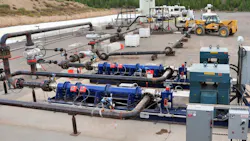
Geothermal development captures energy by drilling deep into the ground to harness natural heat generated by the Earth’s subterranean layers. The subsurface heat, as a result, provides thermal energy and hot water necessary for heating, cooling and electricity generation. Tapping that resource, however, has historically been difficult in some locations.
Some of these geothermal applications, such as geothermal power plants or geothermal energy storage, can leverage millions of megajoules or many MWh of energy capacity. BLM notes that it has authority for geothermal leasing in 11 western states, including Alaska and U.S. Forest Service lands.
Other states reportedly differ in the reality of leasing amid various statutory limitations between the state and federal level. States such as Nevada, Utah and California have increased geothermal initiatives through power purchase agreements to supply growing data operations despite these constraints.
The federal “Unleashing American Energy" framework utilizes geothermal lease sales through competitive auctions to maximize geothermal’s potential to secure domestic energy production and fortify national economic and military security.
“Geothermal is an abundant resource, especially in the West, with the potential to provide reliable energy,” said Kim Prill, BLM Oregon and Washington state director, in a statement. “The BLM is committed to unlocking that potential to support American energy production and our local economies.”
By making hundreds of millions of federal subsurface acres available, this initiative aims to grow a renewable foundation for energy resilience. The BLM notes it has authority to manage geothermal exploration and development on roughly 245 million surface acres of public lands and 700 million acres where the U.S. owns the subsurface mineral estate.
Oregon and Washington have reportedly missed out on much of this opportunity due to traditional limitations of hydrothermal technology despite regional volcanic activity providing untapped underground thermal potential.
A report from global non-profit organization Clean Air Task Force (CATF) highlights actionable policies that western state governments can pursue to deploy next-generation geothermal energy as a clean firm power resource capable of operating wherever subsurface rocks are hot. These state-level actions aim at trying to improve transmission access, digitize historical well logs and establish procurement requirements targets.
CATF modeling points out that next-gen geothermal capabilities could provide up to 4 TW of U.S. electric capacity. Despite this ambitious outlook, active state-level deployment remains limited.
The U.S. Department of Energy (DOE) also estimates that next-gen geothermal could provide the U.S. with up to 300 GW of power by 2050. In February, DOE announced $171.5 million in funding opportunities for next-gen geothermal field-scale testing to expand these innovation efforts across western states.
Emerging Microgrid Technology
Speed to Power for Data Center Customers
Aug. 26 EnergyTech Webinar Featuring PowerSecure
About the Author
 Eric Moody