Constellation's 20-Year PPA Deal with Google to bring 890 MW of Nuclear Capacity through Uprates to PJM Grid
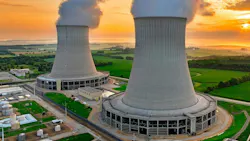
Global tech giant Google and utility power producer Constellation are bringing 890 MW of new, emissions-free generation onto the PJM Interconnection grid through a 20-year power purchase agreement (PPA).
The deal, announced Tuesday, is part of a long-term clean energy collaboration that will enable investments in new equipment and technology at 11 Constellation-owned nuclear units in Illinois, Pennsylvania and New Jersey, according to a company release. The first uprate portion of this $4.3 billion financial structure is expected by 2028 to ensure continued operations through an additional 2,700 MW, 15-year agreement.
Although Constellation is funding this effort, Google is acting as the guaranteed buyer for this project. This structure ensures Constellation’s existing assets continue to generate enough revenue without taking viable resources offline in the PJM market—or requiring expensive bottlenecks of greenfield construction.
“Preserving and expanding the output of the existing nuclear fleet and developing new clean generation is critical to meeting our nation’s growing energy needs while keeping costs affordable for homes and businesses,” said Joe Dominguez, chairman, president and CEO of Constellation, in a statement. “This long-term clean energy collaboration with Google can serve as a model for how technology companies and the energy industry can work together to responsibly develop the digital economy and invest in our nation’s energy infrastructure in a way that delivers grid-wide benefits for all, funded by private entities.
The partnership aims to advance the federal government’s UPRISE program, which fosters public-private collaboration to maximize output from existing American nuclear infrastructure.
A recent example of this public-private momentum is the U.S. Department of Energy’s (DOE) Office of Energy Dominance Financing's recent announcement of lending $4.2 billion to independent utility-scale generator Vistra Corp. The effort is boosting the output at several of Vistra’s nuclear power generation sites amid the rise of AI and data centers.
Under this Constellation-Google agreement, Constellation will also deploy Google Cloud and Gemini Enterprise services as part of a five-year alliance to establish an “AI for energy” blueprint. The blueprint aims to accelerate grid capacity delivery to support hyperscalers and other large-scale energy usage customers—while optimizing asset outputs and protecting critical infrastructure that communities served by Constellation Energy rely on.
The agreement offers a framework in direct response to PJM’s "Bring Your Own Power" (BYOP) proposal, as the largest grid operator in the U.S. is struggling to secure enough generation for households, businesses and data centers. Google has already begun optimizing its strategy within PJM's territory, with companies like virtual power plant (VPP) aggregator Voltus.
Over the next two years, Google is committed to spending roughly $25 billion in the PJM territory to support its growth for AI and data center infrastructure without passing on costs to residential customers, aligning with the White House Ratepayer Protection Pledge.
"We’re committed to meeting our growth responsibly by actively investing in clean, reliable power that brings new capacity to our nation's grids," said Amanda Peterson Corio, global head of energy and power at Google, in a statement. "Our agreement with Constellation to fund nuclear reactor uprates will strengthen the PJM grid, which serves 67 million people, all while protecting energy affordability and supporting local union jobs."
Hyperscalers like Google, Meta and Amazon are among those increasingly investing in the future of nuclear capacity growth to meet the expected load from new AI digital infrastructure. While conventional nuclear plants are the most streamlined path, future investment includes the development of small modular reactors (SMRs) to further advance this goal. Elementl Power is partnering with Google on three projects being designed to generate a minimum of 600 MW of carbon-free nuclear energy capacity online by 2035.
SMR designer X-Energy, which signed future supply deals with Dow Chemical and Amazon, is advancing a nuclear fuel fabrication facility in Tennessee with the Oak Ridge National Laboratory. SMR designers TerraPower and Oklo announced agreements with Meta to support more than 6 GW of carbon-free advanced nuclear capacity for the digital tech and online giant.
No commercial microreactors or SMRs are yet operational in the U.S., but multiple projects are under deployment for slated operations in the late 2020s and 2030s.
About the Author
 Eric Moody