Sodium vs. Lithium: New Economics Challenge Lithium-Ion's Proven Resilience in Next-Gen Energy Storage Markets
Key Highlights
- Wood Mackenzie reports more than 70 GWh of sodium-ion supply agreements across the U.S., China and Europe.
- Sodium-ion cells could reach LFP-level production costs by the end of 2026, while grid-ready systems may not match LFP upfront pricing until after 2030.
- Passive cooling, extreme-weather durability and fewer mid-project battery replacements are among potential SIB advantages.
- Global markets are evaluating 21% lower total ownership costs over a 20-year SIB project lifespan, despite higher upfront cell costs than LFP.
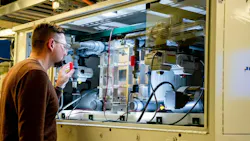
In the race for next-generation grid power, lithium-ion and sodium-ion batteries (SIB) are increasingly competing in the global energy storage market. Amid this shifting landscape, SIB developers like Alsym Energy are advancing non-lithium-ion and advanced battery energy storage systems (BESS) across multiple use cases like mining.
The safety performance of lithium-ion is significantly stronger in newer systems than in vintage BESS designs. As EnergyTech previously reported, the Electric Power Research Institute (EPRI) highlighted in an October white paper that BESS failures per deployed GWh declined 98% between 2018 and 2025.
For years, however, lithium-ion batteries in legacy systems were prone to catastrophic fires. That same seven-year span includes separate fire events at the Moss Landing Power Plant in Monterey County, California, and a 2019 thermal runaway event that severely injured eight firefighters in Surprise, Arizona.
These incidents exposed critical safety risks in early-vintage BESS—just as large-scale energy users race to bring record capacity online for AI data centers and next-gen industrial electrification. That behind-the-meter and grid-scale surge has prompted the industry to look for safer alternatives.
Beyond safety: The commercial surge of sodium-ion
Although newer lithium-ion battery designs have largely addressed these safety concerns, sodium-ion batteries are still surging into commercial production for the global energy storage sector.
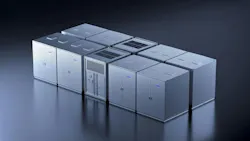
This includes production of the TENER Sodium Energy Storage System from Contemporary Amperex Technology Co., Limited (CATL), which debuted in Munich, Germany. The company claims it is a field-validated sodium-ion energy storage solution.
In early market deployments, sodium-ion batteries are demonstrating their potential viability for long-duration storage, weather resistance and safety in next-gen operations. Yet this momentum isn’t directly linked to thermal runaway in vintage lithium systems.
According to a recent Wood Mackenzie (WoodMac) report, sodium-ion's improving economics stem from its 20-year lifecycle math, extreme-weather durability and broader shifts in global trade policy.
In WoodMac’s November report, “Sodium-ion batteries: commercialisation begins, economics to follow,” the global research firm noted that sodium-ion batteries are now entering commercial production with over 70 GWh of supply agreements already secured across China, the U.S. and Europe. Tracking market trends in China, the U.S., Germany and India, the report found that sodium-ion is establishing itself as “the most cost-effective emerging alternative” to lithium-ion battery storage.
Top manufacturers are on track to produce raw sodium-ion battery cells as cost-effectively as lithium iron phosphate (LFP) by the end of 2026. However, WoodMac noted that grid-ready sodium-ion BESS won't match the upfront pricing of comparable LFP systems until after 2030.
“The 2030-2035 window is where the economics decisively shift,” said WoodMac senior research analyst Priya Shrivastava in a statement. “For projects being deployed today, LFP remains the bankable choice for two- to four-hour duration assets.”
China, which dominates early manufacturing in this sector, is projected to achieve an 18% to 20% "learning rate" between 2026 and 2035. WoodMac explains that this means China will have the ability to drop its production costs by roughly one-fifth every time its cumulative sodium-ion output doubles.
“While SIB offers manufacturers a valuable alternative, the chemistry still faces material challenges: scaling production, refining cell materials and establishing a track record of consistent performance,” added Shrivastava.
Today, sodium-ion chemistries account for less than 1% of global battery production for EVs and energy storage, according to WoodMac, and still cost more overall than lithium-ion for an equivalent storage capacity. Yet sodium is the sixth-most common element available to miners, roughly 1,000 times more abundant than lithium.
Shrivastava explained that the most probable outcome WoodMac views is a sodium-ion battery market served by different technologies, each optimized for distinct applications and duration profiles.
Passive cooling and the 20-year lifecycle math
LFP, a lithium-ion battery chemistry, uses iron phosphate as its cathode material and can store up to 205 watt-hours per kilogram in each cell. Major manufacturers like CATL have unveiled LFP architectures that meet this threshold to boost energy capacity for large-scale stationary storage.
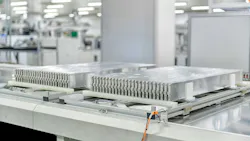
However, as WoodMac previously highlighted, LFP requires energy-intensive active cooling to maintain safe operating temperatures in standard energy storage tech built around its chemistry.
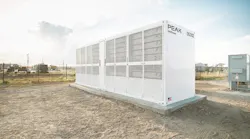
U.S. companies like battery storage developer Peak Energy are developing passively cooled BESS tech to deploy next-gen sodium-ion battery cells, built for stationary grid storage applications. By eliminating active cooling systems, Peak Energy claims its sodium-ion BESS reduces lifecycle energy storage costs by 20% (compared to conventional systems) while delivering more than 99% uptime.
Even though sodium-ion batteries cost 14.5% more upfront than LFP, averaging $229 per kWh globally versus $200 per kWh, WoodMac detailed that they deliver a 21% lower total cost of ownership (TCO). Over a 20-year project lifespan, this lower TCO stems from eliminating the need to add replacement batteries mid-project (augmentation events) and reducing operating expenditure.
Global policy and manufacturing scale: Shifting legacy BESS dynamics
For many aging LFP systems, simply replacing older units or funding modernization upgrades may not always be the most cost-effective approach. That is why global industrial policy is also accelerating sodium-ion battery adoption faster than manufacturing learning curves alone.
Chinese battery and EV giant BYD reportedly has 30 GWh of planned manufacturing capacity in China, while CATL, the world’s largest manufacturer of lithium-ion batteries for EVs and energy storage systems, is targeting at least 1 GWh of SIB shipments by the end of 2026.
China has also exempted sodium-ion batteries from new consumption taxes through 2028. In the U.S., WoodMac noted that policymakers are leveraging a 58% Section 301 tariff on Chinese storage cells to counter practices that threaten trade agreements. U.S. officials have also paired this effort with IRA 45X manufacturing credits to spur domestic sodium-ion battery production.
This push to manufacture next-gen tech domestically mirrors a broader supply chain bottleneck in the U.S. solar sector, a challenge highlighted by American solar technology developer Swift Solar.
“The industry remained heavily reliant on overseas suppliers for critical components and manufacturing technologies,” said Joel Jean, founder and CEO of Swift Solar, in a statement to EnergyTech regarding the U.S. solar supply chain.
Jean, who leads the U.S.-based solar developer, noted that China's proposal to restrict exports of advanced solar manufacturing technologies highlights the risks of relying on foreign-dominated supply chains. It points to a vulnerability echoed in the battery sector’s heavy dependence on Chinese lithium processing and cell manufacturing.
In 2027, the solar CEO predicts that uncertainty around Chinese manufacturing equipment will only increase interest in building domestic capabilities for next-gen energy technologies.
“We'll see more investment and partnerships focused on expanding domestic cell production, particularly advanced, high-efficiency technologies that can win on performance and cost,” Jean said.
In both sectors, federal tariffs and tax credits are increasingly aimed at solving the same core challenge: moving beyond final assembly to build resilient, American-made cell manufacturing. Together, these policies point to a clear shift—while lithium-ion still anchors today's grid, sodium-ion is rapidly developing its own permanent lane in an evolving energy market.
About the Author
 Eric Moody